Your Stretch Jeans Fit at Noon, Then Sag by Dinner
Stretch does not guarantee shape retention. The care label, rise and pressure across the thighs reveal whether a smaller size will hold or become uncomfortable.
October 1, 2026 · 7 min read
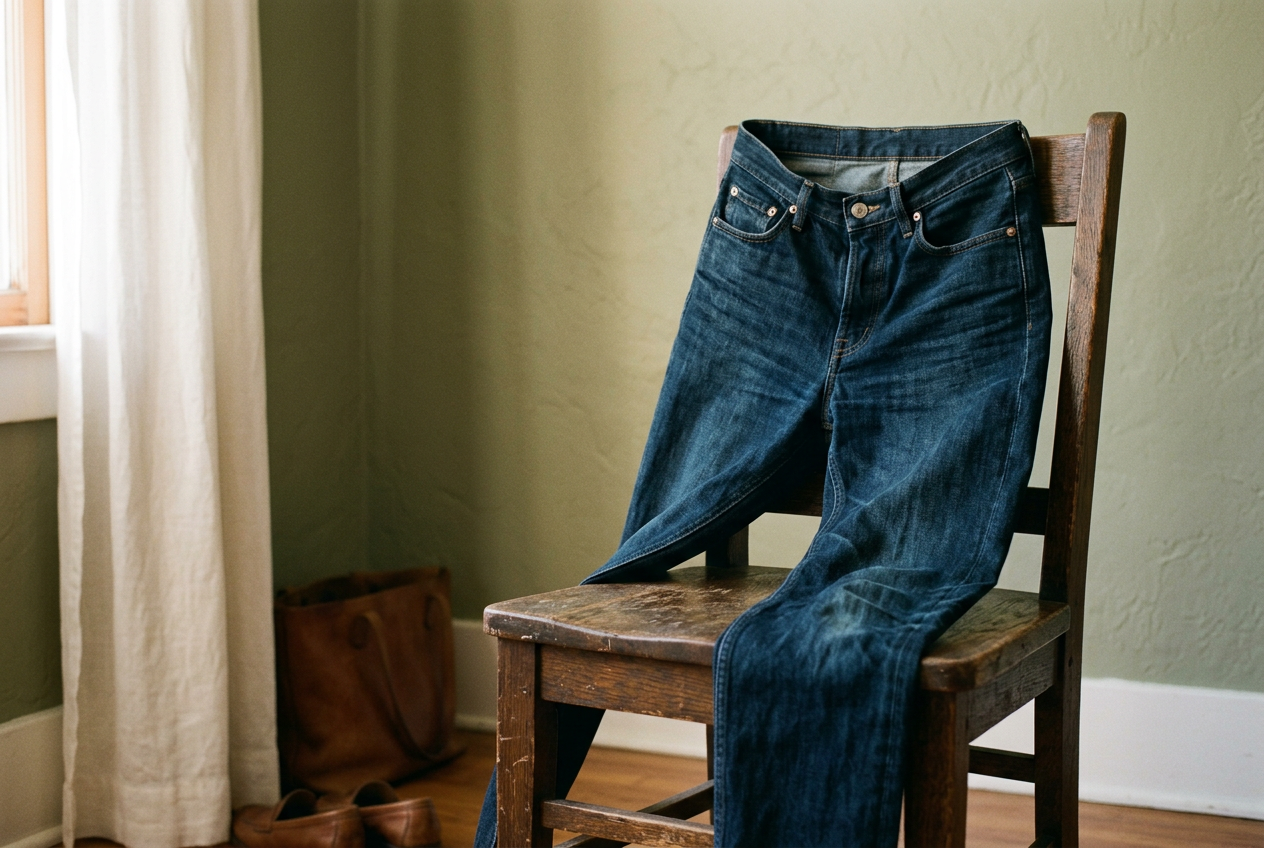
The pair that prompted this test was a dark-wash, high-rise slim jean with cotton listed first on the care label, followed by polyester and elastane. At noon, it sat close through the seat without pinching. After an afternoon of desk work, walking and sitting over dinner, the waistband had eased away from the back, the knees held soft folds and extra fabric had settled below the seat.
Nothing was wrong with the marked size. The problem was recovery, meaning the fabric’s ability to return to its original dimensions after stretching. The jeans extended easily but did not return far enough once the body stopped pulling on them.
This is unisex fit advice. Brand sizing and pattern blocks vary across women’s and men’s departments, but cotton content, rise and thigh pressure affect denim in the same way.
Stretch and recovery are different jobs
Elastane, a synthetic fiber that gives fabric mechanical stretch, lets jeans expand during sitting and movement. It does not guarantee that they will snap neatly back into place. Recovery also depends on how the elastic yarn is wrapped, how tightly the denim is woven and how much strain the garment carries in its smallest areas.
That distinction explains why two jeans with elastane on their labels can behave differently by evening. A dense denim with controlled stretch may soften without losing its outline, while a lighter blend can feel comfortable immediately and then remain slightly extended at the knees, waistband or seat. More stretch can improve comfort, but it also gives the garment farther to travel.
Cotton-heavy denim behaves differently. A rigid jean, meaning denim made without stretch fiber, starts firmer and gradually molds to the body. Cotton still relaxes with warmth and wear, so rigid jeans can develop knee bags or a looser waist, but the change tends to feel like the cloth breaking in rather than an elastic fabric failing to rebound. Washing usually tightens cotton again, at least until the next wear.
Polyester can help a blend keep its dimensions and dry faster, although its presence is not proof of strong recovery. In the anchor pair, the cotton-polyester-elastane label suggested a comfort-oriented fabric, yet the afternoon result showed that composition alone could not answer the fit question. The jeans had to be worn under tension.
The tradeoff is tactile as well as practical. Cotton-heavy denim often feels more substantial and develops a personal crease pattern, but it needs a break-in period and may press at the waist when seated. A stretch blend gives immediate ease and usually feels smoother against the thighs; when recovery is weak, that early comfort becomes late-day looseness.
Price does not settle it. Mall-priced jeans and premium denim can both hold their shape, and either can sag, because the care label reveals fiber content but not the quality of the yarn or the pressure created by the cut. Paying more may buy heavier fabric, finishing or construction. It does not automatically buy recovery.
Rise changes where the looseness appears
Rise is the distance from the crotch seam to the top of the waistband. On the high-rise test pair, the waistband landed at a narrower part of the torso while the slim thighs stayed under steady pressure, so movement pulled the fabric downward even though the waist initially looked secure.
That combination produced a familiar mismatch: a gap at the back waist with tension still visible across the upper thighs. Sizing down would have reduced the waistband circumference, but it also would have shortened the available space through the rise and increased the force on the fabric below it. The smaller size looked cleaner while standing. It felt worse in a chair and pulled the front pockets open.
A lower rise may avoid the narrow-waist gap, yet it can loosen around the hips as the day goes on because there is less body contour to hold it up. Neither rise is inherently better. The useful question is whether the waistband stays anchored without the crotch seam being pulled upward or the thighs borrowing fabric from the seat.
Watch the side seam. It should fall without twisting toward the front, and the fabric beneath the seat should not form firm horizontal lines before the jeans have been worn for an hour. Those lines show tension, not a need for the cloth to “give.” If they appear in the fitting room, the jeans are already working too hard.
Thigh tension decides whether sizing down backfires
The thigh is often the limiting measurement in slim, tapered and straight jeans. When that area is too tight, every step stretches the denim, and sitting asks for still more length across the lap and seat. A highly elastic fabric may accommodate the movement without pain, which can hide the mismatch until the yarns remain extended later in the day.
This was the decisive clue in the dark-wash pair. The waistband gap made the jeans look too large by dinner, but the upper thighs had shown diagonal drag lines from the first fitting. The sag was not spare fabric distributed evenly around the garment. It was fabric displaced by repeated tension in one area.
Sizing down works when the current pair is loose through the waist, seat and thighs, the rise still has vertical room, and the smaller size permits a full seated bend without changing the pocket shape. It backfires when only the waistband is loose. A smaller size may create a flatter standing silhouette, then press into the abdomen, pull at the zipper or force the back rise downward after a meal.
People with a larger difference between waist and hip measurements may get a better result from choosing the size that fits the seat and having the waistband altered. That costs more time and money than exchanging a size, and very lightweight stretch denim can be awkward to tailor cleanly, but it addresses the actual mismatch rather than adding tension everywhere else.
A different cut is often the cheaper answer. Moving from a slim thigh to a straight or relaxed thigh can stop the fabric from being dragged downward, even when the waistband measurement stays similar. For the test pair, the useful alternative was not the same jean one size smaller. It was a cotton-heavier straight cut with enough thigh room to remain in place.
A fitting-room test should include sitting
Start with the care label, but treat it as a clue rather than a verdict. Cotton listed alone points to a firmer break-in. Cotton with elastane promises stretch, while added polyester may support stability. None of those combinations tells you how the pattern will meet your body.
Put on your usual size and the neighboring size that addresses the problem. Stand naturally instead of holding in the waist, then sit long enough for the fabric to warm. Cross one leg, bend to reach a shoe and take several full steps. The jeans should permit movement without the waistband rolling, the zipper area forming sharp lines or the front pockets lifting away from the body.
Next, stand and wait. Strong recovery will pull much of the temporary wrinkling back toward the body. A little softening is normal. A new hollow beneath the seat, a waistband that can now be pulled well away from the back or persistent knee folds indicate that the fit is likely to grow during a full day.
The pinch test is less useful than it looks. Stretch denim can pull several inches away from the body even when the underlying cut is too tight, because the test measures extension rather than spare room. Pocket distortion and drag lines tell more.
If a retailer permits only an unworn return, reproduce ordinary movement without leaving the fitting area or removing the tags. A few minutes cannot simulate dinner-hour sag, but it can expose a rise that presses, a thigh that grips or a waistband that depends on perfect posture.
Care can slow sagging but cannot correct the cut
Heat is hard on elastane over time, so check the garment instructions before washing and use a cooler cycle when the label allows it. Turning dark denim inside out reduces surface abrasion and fading. Air-drying avoids prolonged dryer heat, though it takes more time and can leave heavier jeans feeling stiff until they are worn.
Washing temporarily restores shape because cotton contracts and the garment resets. It also adds friction and fades dye, so laundering after every short wear is a costly way to manage a fit problem. If the dark-wash pair needs a wash or hot dryer cycle to fit again after each outing, the recovery and cut are not meeting the job.
Resting stretch jeans between wears may let some elasticity return, but it will not repair overstretched fibers or create missing thigh room. The evening sag still begins at the first point of tension.
Questions people ask
Should stretch jeans feel tight when they are new?
They can feel close, but they should not distort the pockets, pull the side seams forward or press the crotch seam upward when you sit. Mild softening is expected. Starting with visible drag lines assumes the fabric will correct a cut problem, and that often produces more sag elsewhere.
Will jeans with more cotton sag less?
Not in every case. Cotton-heavy denim can relax at the waist and knees, especially between washes, but it usually stretches less freely than a lightweight elastane blend. Fabric weight, weave and cut matter alongside the fiber list, so compare how the jeans recover after sitting rather than shopping by cotton percentage alone.
Can a belt fix stretch jeans that loosen during the day?
A belt can hold a loose waistband against the body, but it cannot return shape to a sagging seat or release pressure at the thighs. If the belt causes bunching around the back loops, the waistband is larger than the area below it and an alteration or different cut will look cleaner.
How can
I tell whether to size down or change cuts?
Size down when looseness is distributed through the waistband, seat and thighs and the smaller pair remains comfortable while seated. Change cuts when the waist gaps but the thighs show drag lines, the pockets flare or the rise feels short. In that case, look for more thigh room while keeping the waist close.
One update a day
Today's fashion update, in your inbox
One fashion update each morning — no hype, no filler, just pieces worth wearing.