Cork Sandals Feel Supportive Until Sand Gets Underfoot
A molded cork footbed handled dry pavement well, then turned hostile once sweat and sand met underfoot. Suede softens the ride, but washable synthetic wins near water.
September 30, 2026 · 7 min read
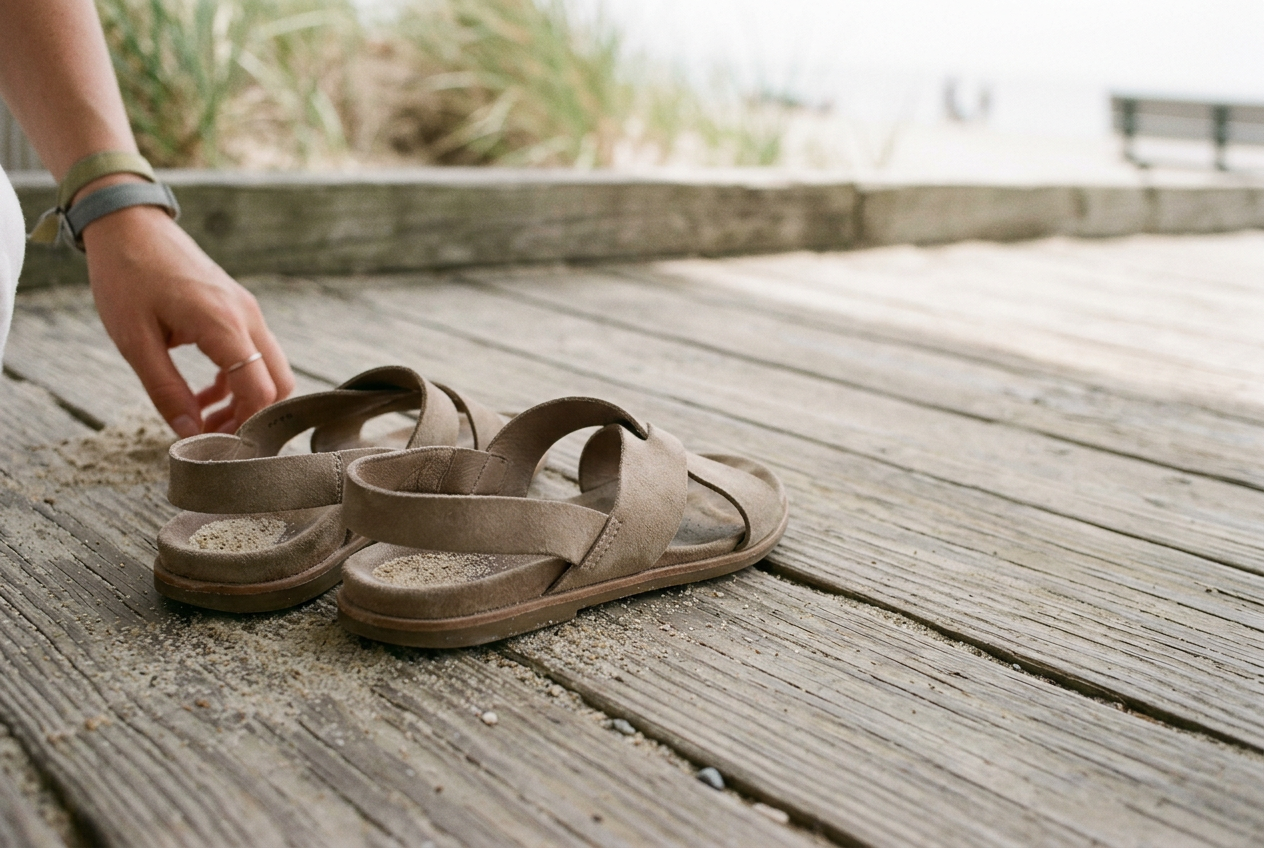
The test pair was a two-strap sandal built around a molded cork-latex footbed, meaning granulated cork is mixed with latex so it can hold a shaped heel cup, raised arch and toe grip. A thin suede lining covered the footbed, while an EVA outsole, made from a light foam commonly used for cushioning, kept the cork away from the pavement.
I wore that pair through a hot summer week on dry sidewalks, during errands that produced a respectable amount of foot sweat, and on a sandy walk where grit got between the suede and my bare feet. The advice is unisex. Foot width, arch position and strap placement matter more here than whether a retailer files the sandal under women’s or men’s shoes.
The first result was unsurprising but useful: dry cork sandals can feel more supportive after several hours than soft foam slides, provided the molded shapes match the wearer’s foot. The second result arrived with sand. Support remained, but comfort left without saying goodbye.
Why the dry footbed worked
On clean pavement, the test pair spread pressure across more of the sole than a flat sandal. The heel sat inside the cup rather than wandering over the back edge, while the raised arch reduced the sense that the middle of the foot was hanging unsupported between heel and forefoot. That structure mattered most late in the day, when a very soft slide would usually feel compressed and vague.
Cork does not cushion like a running-shoe midsole. It gives a little under body heat and pressure, then holds its shape, which produces a firm platform rather than a plush one. Anyone shopping for cloudlike softness will find the description “comfortable” rather optimistic. The appeal is steadiness.
Fit decides whether that steadiness helps. In the test pair, my heel landed centrally and the arch rise met the inside of my foot without pushing into it. There was a narrow strip of empty footbed around the toes and heel, enough to keep skin off the raised perimeter during a normal stride. If the foot fills the entire bed, the cork rim can rub before the material has had any chance to settle.
The straps also needed more slack than they appeared to need in the mirror. Feet swell in heat, and a close morning fit became pressure across the instep by afternoon. Loosening the upper strap by one hole stopped the leather from pinning my foot against the suede, even though the sandal then looked slightly less neat. Skin rarely respects styling intent.
Sweat changed the surface before it changed the support
The suede lining absorbed light sweat instead of leaving it pooled underfoot. Suede is leather with a softly buffed surface, and that nap created enough friction to stop the foot sliding forward without feeling sticky. During ordinary city wear, this was the test pair’s best feature.
Absorption has a limit. After sustained heat, the footbed darkened at the heel and forefoot and felt damp rather than wet, while the raised edges stayed comparatively dry. That uneven moisture changed the friction across the sandal: the center gripped, the toes moved less freely, and the inside edge became more noticeable each time the foot flexed.
I did not develop a blister during the dry-city portion of the test, but the warning spots were clear. The rear inside edge touched the heel when the foot swelled, and the suede felt rougher where sweat had lifted its nap. A sandal can remain structurally supportive while becoming locally irritating, which is why arch support should not be treated as a complete comfort score.
Drying time also belongs in the buying decision. The test pair needed an open, shaded rest between sweaty wears; putting it straight back into rotation would have meant starting with a cool, slightly damp lining that warmed quickly and held odor more readily. Direct heat can dry leather and damage cork or adhesive, so a radiator and a closed hot car are poor shortcuts.
Sand was the actual failure
Fine sand entered at the open sides and settled into the lowest areas of the molded footbed, especially the heel cup and the channel beside the arch. Sweat held those particles against the suede. Once trapped, they did not roll harmlessly out with each step; they stayed in place and scraped the same sections of skin repeatedly.
The discomfort began under the forefoot, where the toe grip had already increased contact between skin and lining. It then appeared along the inside edge, not because the cork had changed shape, but because the foot was pressing grit into a firm, textured surface. The supportive geometry that felt controlled on pavement gave the sand several useful hiding places. Sand is industrious that way.
Stopping to shake out the sandal helped less than expected. Loose grains fell away, but damp particles remained embedded in the suede nap and around the toe grip, so I had to remove them by hand and let the surface dry before brushing it. Continuing to walk would have cost skin for no meaningful gain in research.
This is the central tradeoff. A molded cork footbed keeps its supportive shape on a beach approach, boardwalk or dry resort street, yet it is badly suited to repeated transitions between loose sand, sweaty feet and water. The problem is not that cork instantly collapses when damp. The problem is that suede-lined contours are difficult to rinse clean, and grit against a firm bed behaves like an abrasive.
When suede earns its place
Suede remains the better option for dry, mostly urban wear. It feels warmer and less clinical than a smooth synthetic lining, absorbs modest perspiration, and gains a visible footprint as it compresses. That footprint can improve familiarity, although it should not be mistaken for custom orthopedic molding.
Choose it when the sandal will spend most of its time on sidewalks, at outdoor dinners, during travel days or around a dry garden. The construction suits someone who values a stable platform and is willing to rotate pairs so the lining can dry. In the price territory where well-built cork sandals compete with decent leather shoes, that care burden is reasonable only if the sandal’s shape already fits.
It is not worth paying more for cork and suede in the hope that an incorrect arch position will become agreeable. A pronounced ridge under the wrong part of the foot usually becomes more obvious over time, while a foot that overlaps the perimeter will continue meeting the edge. Break-in can soften contact. It cannot relocate the architecture.
When washable synthetic is the practical buy
For beach days, pool decks and repeated wet-dry wear, a synthetic molded sandal is easier to live with. A one-piece EVA footbed or a sandal with a washable synthetic lining can be rinsed after sand gets in, wiped clean and dried without brushing a leather surface. It may feel sweatier because moisture sits on top, but the grit does not become as thoroughly lodged.
The alternative gives up some of suede’s dry grip and may squeak or feel slippery until the water drains. Firm synthetic models can still provide a heel cup and arch shape, though very soft versions flatten under load and offer little more structure than a basic slide. Pressing the footbed with a thumb in a store reveals only softness; trying both sandals on and walking long enough for the feet to warm up reveals whether the shape is useful.
A synthetic pair is also the less precious choice when the day includes showers, changing rooms or a bag full of damp swimwear. Washability removes a chore. Cork and suede ask the wearer to stop, empty the shoe, dry it slowly and brush away the remaining grit, which is a surprisingly formal relationship to have with a beach sandal.
The fit check to do before buying
Try cork sandals late enough in the day that the feet are not at their smallest. Stand with weight evenly distributed, then check that the heel sits inside the cup, the toes do not ride the front ridge and the arch rise meets rather than prods the foot. Walk down a slight incline if the store setup allows it, since forward movement exposes toe-grip pressure and strap slip.
The test pair worked in its usual size because my foot stayed within the perimeter, but the usable length mattered more than the number printed on the sole. Cork sandals are often offered in different widths, and a narrow label does not merely reduce strap volume; it can change where the raised edges meet the foot. Someone between widths should favor the bed that contains the foot cleanly, then use the straps to refine the hold.
At home, wear a new pair on clean floors before committing it to the street. Ten comfortable standing minutes do not settle the matter. The useful test includes warm feet, several turns, stairs and enough continuous walking to reveal whether the edge catches the heel. Return policies are more comforting than moleskin.
Questions people ask
Can cork footbed sandals get wet?
Brief splashes are unlikely to ruin a well-made pair, but suede-lined cork sandals are poor water shoes. Repeated soaking can affect leather, adhesive and exposed cork, while the contoured bed holds damp grit. Let splashed sandals dry in shade with the straps open rather than applying direct heat.
How do you remove sand from a suede footbed?
Let the sandal dry first, then tap out loose sand and use a soft suede brush to lift particles from the nap and molded channels. Do not scrub a damp footbed aggressively, since that can drive grit deeper and roughen the surface that sits against the skin.
Should cork sandals fit tightly at first?
No. The foot should stay within the raised perimeter, but the straps need room for normal heat swelling and movement. A firm footbed may become more familiar with wear; an edge under the heel, misplaced arch ridge or strap cutting into the instep is a fit problem, not a character-building exercise.
Are synthetic footbeds better for sweaty feet?
They are easier to rinse and dry, especially when sweat mixes with sand, but a smooth synthetic surface may feel slicker or wetter during wear. Suede handles modest perspiration more pleasantly on dry days. Choose synthetic when cleaning and water exposure matter more than soft underfoot texture.
One update a day
Today's fashion update, in your inbox
One fashion update each morning — no hype, no filler, just pieces worth wearing.