Backless Sneakers Save Time, Then Shorten Your Stride
A collapsible heel managed a mile-long commute with minor adjustments. A true sneaker mule made every stair feel like a small negotiation.
October 7, 2026 · 7 min read
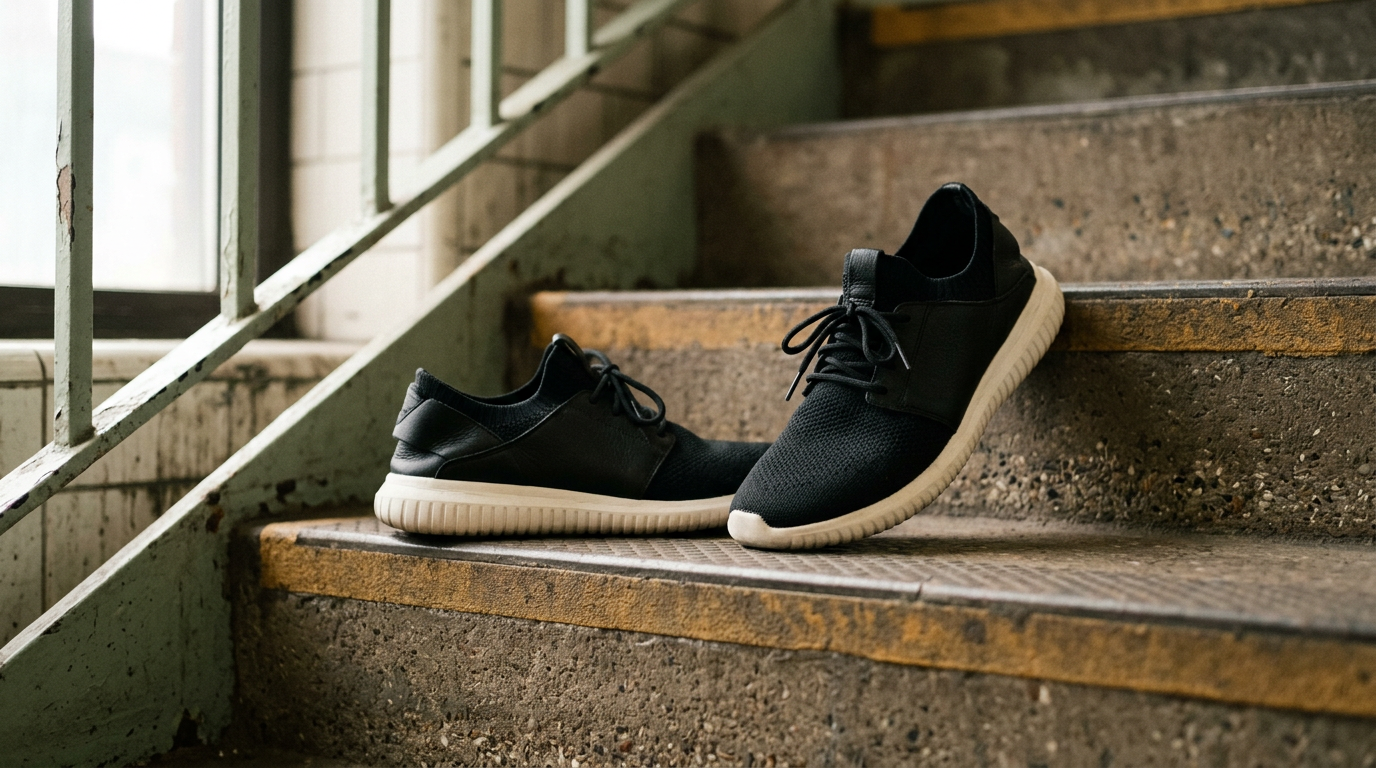
Backless sneakers have moved beyond garden-shoe territory. The useful versions now borrow the knit uppers, foam midsoles and rubber outsoles of ordinary lifestyle sneakers, then remove or weaken the part responsible for keeping the heel attached. Convenience has entered the building. Heel stability is waiting outside.
For one commuting week, I centered the test on a black engineered-knit sneaker with a collapsible heel, worn both folded down and pulled upright. The comparison shoe was a gray mesh mule with an EVA midsole, meaning a lightweight foam layer under the foot, and a fully open back. Both occupied roughly the price territory of a decent everyday sneaker rather than a disposable errand shoe.
This is unisex coverage. The mechanics apply across wardrobes, although anyone buying across men's and women's size scales should use the brand's foot-length chart rather than relying on the usual size conversion.
The one-mile setup
The route was deliberately ordinary: about a mile of pavement broken by a station staircase, a train transfer and several curb changes. I wore medium-weight crew socks, because a bare foot introduces sweat and friction variables while an ultra-thin dress sock can make almost any loose shoe look guilty.
The black collapsible-heel pair had a flexible knit upper, a cushioned foam collar and a heel counter, the structural piece that cups the back of the foot, soft enough to flatten under body weight. Pulled upright, it looked and felt close to a regular casual sneaker. Folded down, that same counter became a padded shelf under the heel.
That distinction matters. A collapsible-heel sneaker still has material behind the foot when restored, even if the hold is weaker than on a conventional trainer. A mule has no rear structure to restore. Its upper must do all the work through the instep, where the shoe crosses the top of the foot.
Entry was easy in both. The mule won by a fraction because there was nothing to arrange, while the black pair occasionally needed a toe tap to settle the heel when worn folded. With the heel upright, stepping in hands-free worked most of the time, but a rushed entry could leave part of the collar tucked inward. The shoe was on.
The shoe was also filing a minor complaint.
Pavement changed the stride
On level pavement, the collapsible-heel pair worked best with its heel upright. My stride remained close to normal, although the soft counter allowed a little vertical movement at the back. The foot rose first; the shoe followed shortly after. That delay was small, but it became noticeable once the walk moved past the first few blocks.
Fold the heel down and the gait changes more clearly. I shortened my stride and landed more flatly because a strong heel-to-toe roll encouraged the shoe to separate from the foot. The toes also began gripping inside the knit upper, an unconscious attempt to retain the shoe that made the forefoot feel busier than it would in a laced sneaker.
The mule exaggerated both habits. Its instep fit was reasonably close, yet the open rear lifted with every step, creating a soft slap against the sock and footbed. Walking faster increased the movement rather than solving it. By the second half of the mile, I was taking shorter steps and placing the whole foot more deliberately, which is manageable but defeats the point of wearing a sneaker-shaped object for sneaker-like movement.
Neither shoe produced immediate rubbing during the test. That is not the same as comfort. Reduced heel hold can shift effort toward the toes and lower leg without creating a dramatic hot spot, leaving the wearer merely tired and annoyed, two conditions footwear advertising rarely puts in bold type.
Stairs made the difference obvious
Going up stairs was acceptable in the black pair with the heel upright. The counter compressed slightly but retained enough of the foot to manage a normal pace. Folded down, the shoe demanded a flatter foot placement; push too firmly from the forefoot and the heel lifted away before the shoe caught up.
Descending was less forgiving because the foot moved forward inside both designs. The collapsible pair's knit and lacing area slowed that slide, although the folded heel provided no rear check. In the mule, I curled my toes and reduced speed. Nothing catastrophic happened.
Nothing elegant happened either.
Transit transfers added another problem: lateral movement. A straight walk lets an open-backed shoe rely on forward momentum and instep pressure, but changing direction around another passenger asks the upper to control side-to-side motion. The mule allowed the heel to drift toward the edge of the footbed during sharper turns. The collapsible pair stayed better centered when upright and only slightly better when folded.
For a commute involving escalators, crowded platforms or frequent direction changes, the upright collapsible heel was the only configuration I would repeat. A true mule suits the short walk from apartment to car, or a level office floor where the largest obstacle is someone stopping beside the coffee machine.
Socks became part of the fastening system
Sock movement showed up before skin irritation. In the black sneaker, the crew sock gradually rotated at the heel when the counter was folded, pulled by repeated contact with the padded edge. Restoring the counter reduced that movement because the fabric stayed in contact with a larger area of the sock rather than rubbing one narrow strip.
The mule pushed the sock forward. After the mile, extra fabric had gathered near the toes, and the heel of the sock sat lower than when the walk began. A slick synthetic sock made this worse on a later short trip; a cotton-rich athletic sock with a denser knit stayed put more successfully, though it added warmth.
No-show socks were the least convincing option. Their low heel edge sat directly where the collapsible counter flexed, and the mule gave them enough room to migrate below the foot. If the clean, sockless appearance is central to the outfit, a no-show style with a substantial silicone heel grip may help, but the shoe still needs a snug instep. Adhesive cannot correct excess volume.
Bare feet would remove sock migration while increasing contact with seams and footbed fabric. In warm weather, that trade is likely to become damp. Neither test shoe had the open airflow of a sandal, despite the exposed heel.
Fit matters more than sizing down
Do not automatically buy a mule half a size smaller to make it stay on. Shortening the shoe can put the toes against the front without improving hold over the instep, particularly for a low-volume foot. The better check is whether the upper holds the midfoot when the heel rises, while the toes remain relaxed and the foot does not slide past the back edge at rest.
The black collapsible-heel sneaker fit in my normal length. Its useful quirk was volume: the knit upper could be adjusted through the laces even though daily entry remained hands-free. Tightening the midfoot slightly reduced heel lift without making the opening difficult to use. A fixed-upper mule offered no comparable adjustment.
Wide feet may prefer the open rear but still need enough room across the forefoot. Narrow heels are less relevant in a mule because there is no heel cup; a shallow instep, however, can leave the entire shoe loose. That is why two people with the same measured length can have opposite results.
Try either design late in the day, when feet tend to occupy more volume, and use the socks intended for commuting. Walk quickly, turn once and take several stairs if the store permits it. A shoe that stays on during six careful carpeted steps has passed very little.
The convenience calculation
Hands-free entry earned its keep on mornings involving repeated shoe removal, particularly at home. The collapsible pair also worked for someone carrying a bag who did not want to put it down and retie laces. Over the full commute, though, it saved less effort than expected because I spent attention managing stride and checking whether the heel had seated correctly.
The mule made sense only when entry mattered more than walking. It is a useful shape for a studio, office or short errand, and wide-leg trousers can cover most of the open heel without making the shoe look like indoor footwear. For a mile, the construction asked too much from the instep and toes.
A closed hands-free sneaker with a spring-back heel is the practical alternative. That design lets the rear structure compress during entry and return around the heel afterward, offering more hold than either test configuration. It may cost about the same as a standard branded lifestyle sneaker, but paying sneaker money for an open-backed version is hard to justify if the regular commute includes stairs.
The black collapsible-heel pair gets the conditional approval. Wear the heel upright for the walking portion, fold it only for quick indoor use, and choose a model whose laces or instep panel can secure the midfoot. The mule remains by the door for trips measured in blocks, not transfers.
Questions people ask
Are backless sneakers good for walking a mile?
A collapsible-heel sneaker can manage a mile if the heel is restored upright and the instep fits securely. A true mule is less convincing: expect a shorter stride, more toe gripping and extra movement on stairs. For daily mile-long walks, a closed hands-free sneaker offers a better compromise.
Do socks slide down in mule sneakers?
They can. The repeated lift and slap at the open heel may pull socks forward or rotate them, especially when the fabric is smooth. A denser athletic sock stayed in place better during this test, while a low no-show sock had too little heel coverage to resist movement reliably.
Should backless sneakers fit tighter than regular sneakers?
They should feel secure over the instep, but the toes still need normal length and room. Sizing down may shorten the shoe without fixing excess volume. Look for adjustable laces, elastic panels or a shaped upper that holds the midfoot while allowing the heel to rise without losing the shoe.
Is a collapsible heel better than a sneaker mule?
For commuting, yes. The collapsible design can provide some rear hold once its counter is upright, while a mule remains open regardless of terrain. Keep the heel folded for quick entry indoors; before stairs or a longer pavement stretch, pull it up and check that the collar is not trapped under the foot.
One update a day
Today's fashion update, in your inbox
One fashion update each morning — no hype, no filler, just pieces worth wearing.