Soaked Cork Sandals Can Dry and Still Fit Differently
A cork footbed can lose its dampness before its shape, smell and flexibility recover. Here is how to dry it, reseal exposed cork and recognize permanent fit damage.
October 3, 2026 · 8 min read
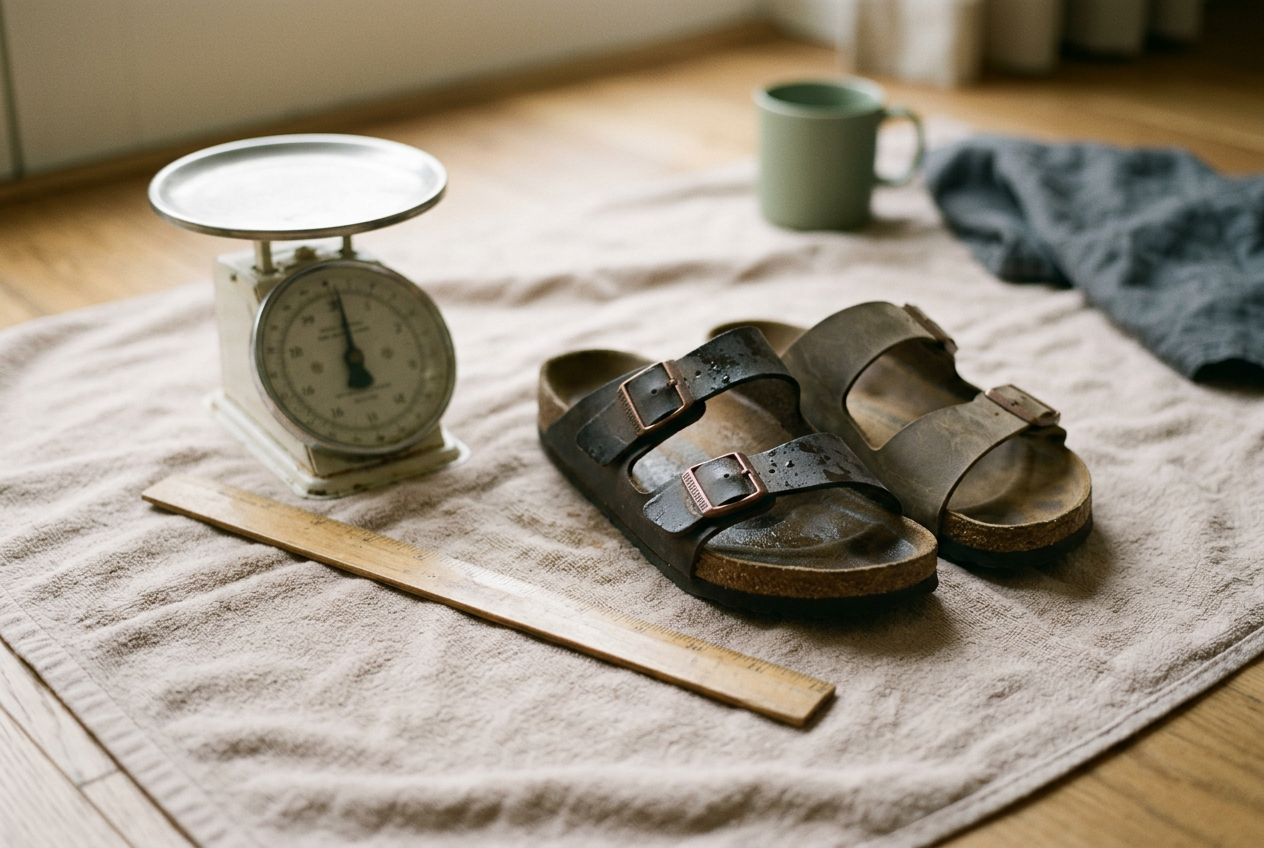
The working example here is a Birkenstock Arizona with a suede-lined cork-latex footbed, meaning granulated cork is bound with latex and shaped beneath the foot. The advice is unisex because the material behaves the same across wardrobes, although foot volume and strap adjustment will affect whether a small change in shape becomes a large change in fit.
An Arizona is useful for this exercise because its cork edge is visible. It also exposes a common misunderstanding: a shiny perimeter does not make the entire sandal waterproof. That shine is cork sealer, a surface coating intended to slow moisture loss and water entry through the edge; the suede lining, strap slots and joins remain vulnerable.
Once the sandal is soaked, drying is only the first job. You also need to track whether the edge has expanded, whether odor remains after surface moisture leaves, and whether the molded footbed has become rigid or misshapen. Cork can appear calm while quietly rearranging the space available for your foot. Feet, traditionally, object.
First identify sealed and exposed cork
Look at the vertical cork edge in bright, indirect light. Properly sealed cork usually has a thin, even sheen. Exposed cork looks dull, dry and porous, particularly around the heel and forefoot flex point, where the coating often wears first.
Do not confuse the suede footbed lining with exposed cork. On the Arizona, the cork-latex structure sits beneath that lining, and putting cork sealer on the surface where your foot rests would create a sticky, unpleasant mistake. Sealer belongs only on the visible cork perimeter, after the sandal has dried.
A maintained sealed edge should resist a brief splash better than a chalky one, but neither version wants immersion. Water can enter from above through the absorbent lining or work into gaps near the sole and straps, so an intact shine changes the degree of exposure rather than granting immunity.
Photograph both sandals before drying if you can. Put their heels against a straight edge and take one image from above, then another at cork level. The unwetted mate, if only one sandal went into the puddle, becomes a useful reference for edge thickness, toe curl and heel-cup shape.
Dry slowly and keep a record
Remove loose dirt with a dry cloth, then press an absorbent towel against the lining and cork edge without rubbing. Do not twist the sandal, clamp it flat or stuff the footbed so firmly that its contours change. Open the Arizona’s straps fully to let air reach the suede beneath them.
Set the pair indoors on a dry towel with space underneath or around the outsole. Keep them away from radiators, hair dryers, heated floors and direct sun. Concentrated heat may dry the upper layer before moisture deeper in the footbed has escaped, while also stressing the latex binder and adhesives. Brand care guidance for cork-footbed sandals consistently favors avoiding extreme heat and prolonged water exposure.
Drying time cannot be reduced to one honest number. A surface splash, a fully saturated footbed and a damp sandal left inside a bag are different events, while room humidity and the thickness of the construction alter the result. Plan around at least an overnight interruption and accept that a thoroughly wet pair may remain out of service longer.
A kitchen scale makes the drying check less subjective. Weigh each sandal after blotting, record the result, and repeat at intervals of several hours; once the reading has stopped falling across two checks, inspect the lining for cool areas, because evaporating moisture often makes damp suede feel cooler than the room. The scale need not be laboratory equipment. It needs to be consistent.
Also measure the visible cork edge at the heel and widest part of the forefoot, using the same ruler position each time. Record odor in plain terms such as neutral, wet leather or sour. Press the footbed at the heel cup and forefoot with one thumb, comparing it with the other sandal rather than assigning an imaginary scientific score.
For the Arizona, the meaningful endpoint is not merely “dry to the touch.” It is stable weight, no cool patches, no continuing change in edge thickness and a footbed response that has stopped shifting. Wearing it before then adds body heat and pressure while the construction remains vulnerable, which is efficient only if the goal is a sandal shaped like a regrettable afternoon.
Treat odor after the water has left
A mild wet-leather smell can fade as the lining dries. Sour or musty odor that remains after the weight has stabilized suggests moisture stayed long enough to support microbial growth, especially around the toe bar and beneath the straps.
Start with the least wet treatment. Brush the dry suede gently with a suede brush to lift its nap, meaning the fine raised fibers on the surface, and remove trapped debris. If odor persists, use a footbed cleaner approved by the sandal manufacturer and follow its quantity and drying instructions. More liquid is not more hygiene here.
Avoid soaking the footbed again with household mixtures. Baking soda can lodge in textured suede, while vinegar solutions may change color or leave their own scent if applied too heavily. A cleaner cannot reverse deep swelling or delamination, which is separation between bonded layers. It can only address the surface it reaches.
Odor that returns quickly during a short indoor wear test is a poor sign. A premium sandal may justify assessment by a cobbler familiar with cork footbeds, but repeated home saturation in pursuit of freshness costs time and can worsen the original damage.
Restore the edge without trapping moisture
Wait until the Arizona has reached stable weight before applying cork sealer. Coating a damp edge can slow the remaining moisture’s exit, particularly where the old finish is still intact.
Brush away loose cork particles and dirt. Apply the manufacturer-approved sealer in a thin coat only to dull, exposed areas of the perimeter, respecting the product’s instructions for drying and additional coats. The aim is an even protective film, not a thick transparent curb around the sandal.
Sealer can restore surface protection and tidy a slightly rough edge. It cannot compress expanded cork back into its prior dimensions, rebond a lifting outsole or straighten a warped footbed. If chunks are missing, a crack opens when the sandal flexes, or the outsole has begun peeling from the cork, stop adding products and take the pair to a repair shop.
The same restraint applies to stiffness. Do not fold or torque the sandal to make it flexible again. After it is dry, use your hands to check whether the forefoot bends smoothly under moderate pressure; if it does, short indoor wear sessions may let the lining and footbed settle without committing you to a full day out.
Decide whether the fit has permanently changed
Put on both Arizona sandals indoors and stand naturally. Start with the old strap holes rather than tightening the wet sandal preemptively, since wet suede straps can stretch even when the footbed has contracted around the foot. Check whether your heel still sits inside the heel cup and whether your toes clear the front edge during a few normal steps.
The fit has materially changed if the dried sandal rocks underfoot, pushes the arch into a new position, crowds toes that previously had clearance or lets the foot slide because the upper stretched. A raised or bowed edge can also reduce usable width, which matters quickly for a high-volume foot even when the ruler shows only a modest difference.
Compare the toe bar, the raised ridge beneath the toes, with the unaffected sandal. If it now presses behind or directly into the toe joints, the molded geometry has shifted. Straps can sometimes be adjusted or replaced. A displaced support structure is harder to negotiate, and wearing through pressure in the wrong place is not a break-in strategy.
Cosmetic roughness is the repairable end of the spectrum. Persistent deformation after weight and measurements stabilize sits at the other end, particularly when it produces heel lift, edge pressure or arch discomfort during a brief indoor test. At that point, the Arizona may still look recognizable while no longer fitting as the purchased size.
Replacing a damaged pair is wasteful, but so is paying for surface work when the platform beneath the foot has changed. Ask a cobbler whether the model’s upper can be rebuilt onto a replacement footbed and sole; availability and value vary, so the answer may depend on the condition of the leather rather than sentiment about the cork.
Questions people ask
How long do soaked cork sandals take to dry?
There is no dependable universal time because saturation, room humidity and footbed thickness differ. Track the sandal’s weight every several hours and wait for two unchanged readings, then check for cool areas in the lining. A thoroughly wet pair should be treated as unavailable beyond the first overnight period, not rushed for the next morning.
Can I use a hair dryer on a cork footbed?
No. Concentrated heat can dry the surface unevenly and stress the latex binder, adhesives or leather upper. Blot the sandal, open its straps and leave it in moving room-temperature air away from direct sun. The slower method is inconvenient, but less inconvenient than a curled footbed pressing into one arch.
Can swollen cork shrink back after drying?
Minor edge swelling may settle as moisture leaves, especially when the cork was sealed and exposure was brief. If measurements have stabilized and the edge remains bowed, the heel cup feels different or the toe bar has moved underfoot, drying and sealer will not restore the original molded fit.
Should
I reseal cork immediately after it gets wet?
Wait until the sandal is dry by weight and feel. Cork sealer protects a dull, exposed perimeter, but applying it over damp cork may slow moisture escape. Keep it off the suede footbed and outsole, use a thin coat, and seek repair help if the edge is cracked or separating.
One update a day
Today's fashion update, in your inbox
One fashion update each morning — no hype, no filler, just pieces worth wearing.