A Bent Threadless Earring Pin Is Normal Until It Kinks
The slight curve in a threadless pin is what keeps the earring together. A sharp bend, damaged base, or fit that keeps loosening means the top has reached replacement time.
October 7, 2026 · 7 min read
The pin behind a threadless earring top should not look perfectly straight after fitting. That small curve is functional. It presses against the inside of the hollow post, holding the decorative end in place without screw threads.
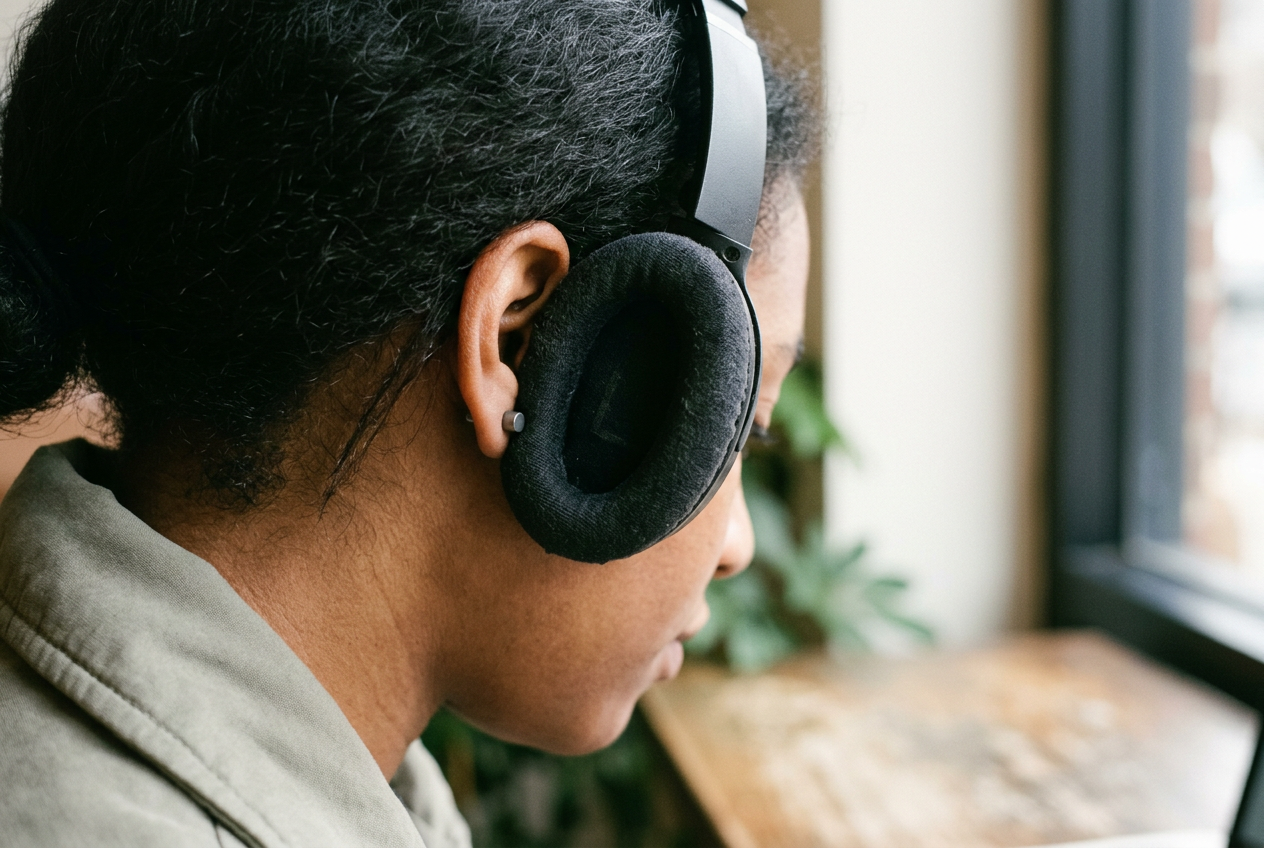
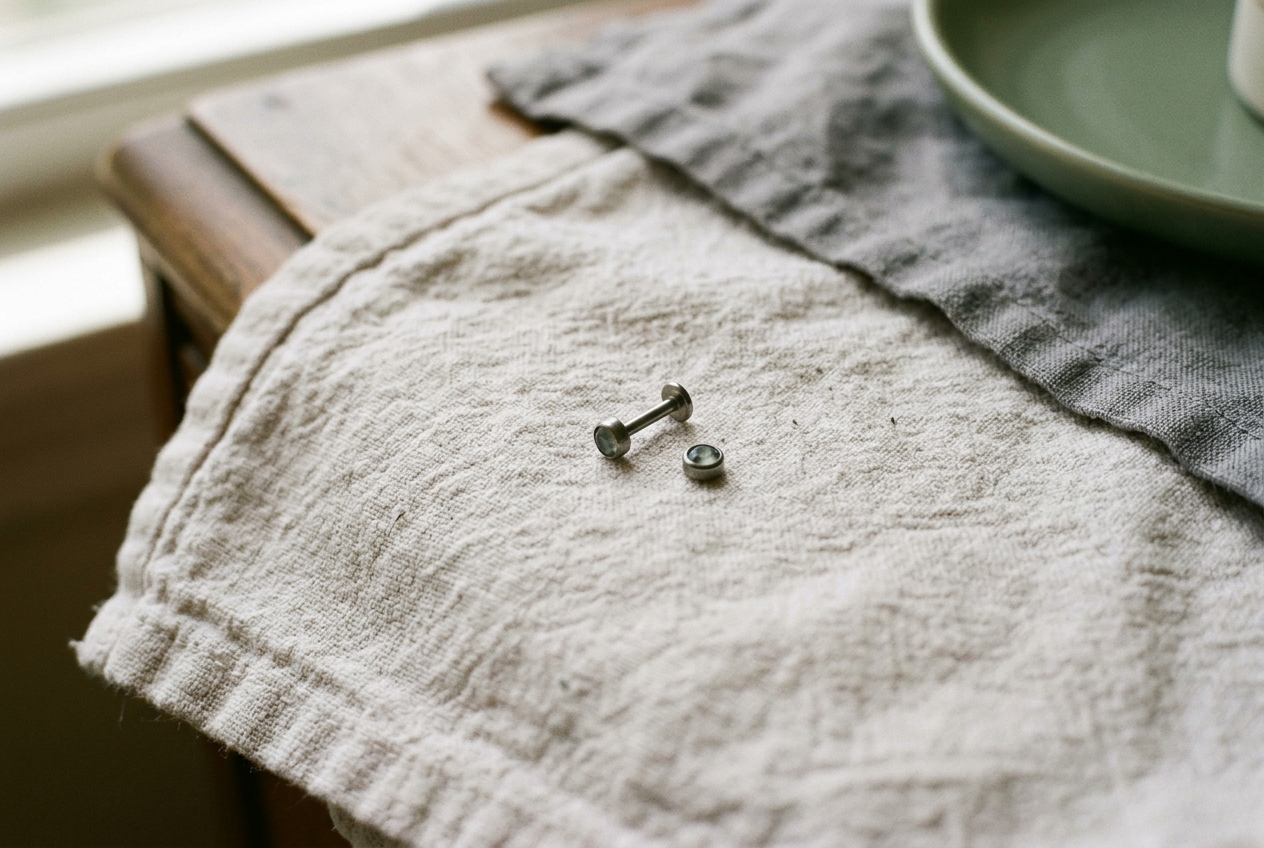
The reference piece for this guide is an 18-gauge implant-grade titanium flat-back labret with a small bezel-set cubic zirconia top, worn in a healed upper-lobe piercing and changed to suit different earring stacks. A flat-back earring, meaning the backing sits flush against the ear, is comfortable enough for daily wear and sleeping. Frequent styling changes put the tiny pin through more handling than leaving it alone would.
This is unisex advice. The mechanics do not change with the wearer or the styling around the earring.
The bend creates the grip
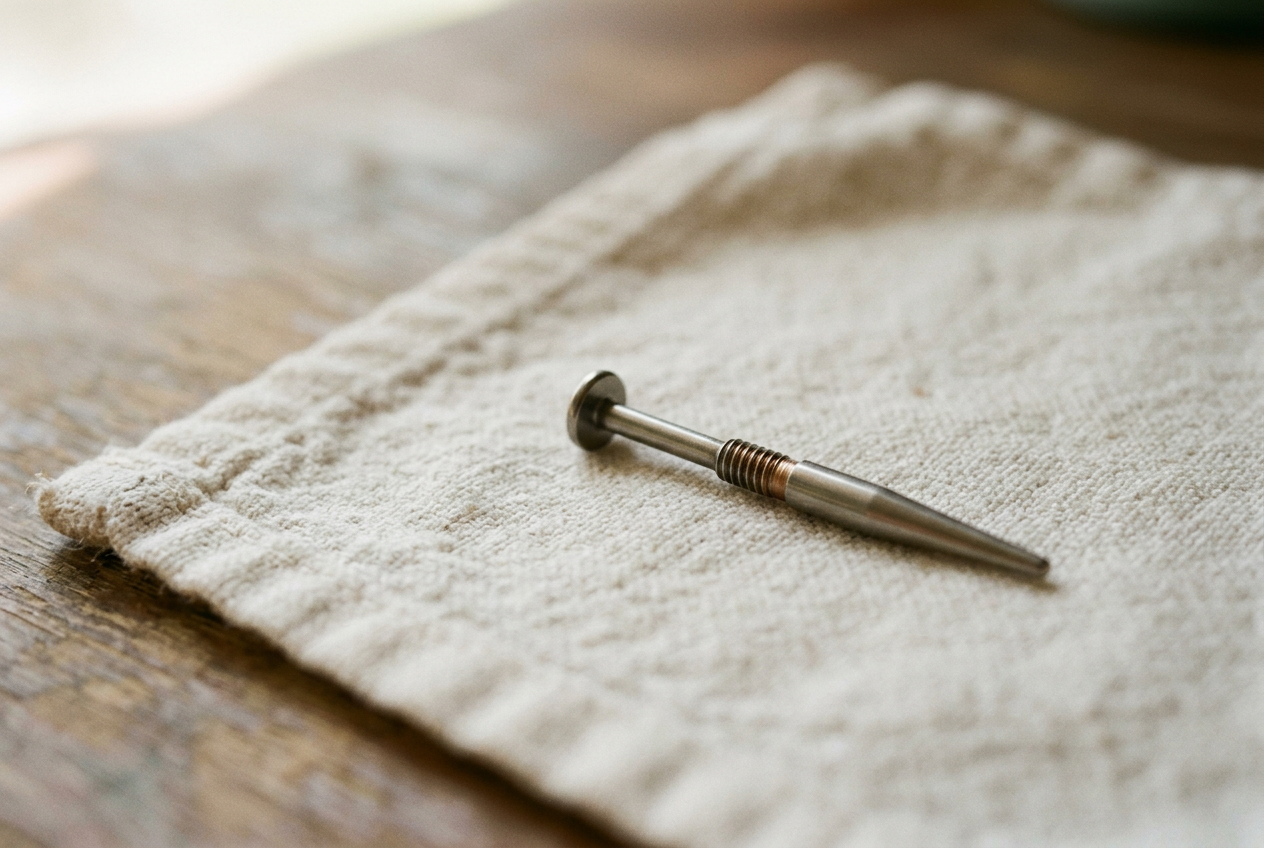
A threadless labret is a hollow post with a removable decorative end that presses into it. The insertion pin, the narrow wire attached to the back of that end, gains its holding power from a slight bend set during fitting.
As the pin slides into the straight post, its curve presses against the inner wall. That friction keeps the top seated. A pin with no bend may slide in too easily and pull free; an excessive bend can be difficult to insert, scrape the inside of the post, or concentrate stress in one spot.
Brand instructions for threadless jewelry commonly show the pin inserted partway into the post before a slight bend is added. The goal is a shallow, continuous curve. It is not a fold. Once the top is pressed fully home, the front should sit close to the post without a visible gap.
On the reference labret, a gentle arc through the middle of the pin is expected. The pin can remain curved between changes. Straightening it before every installation would add unnecessary flexing, which is harder on the metal than leaving a sound bend alone.
A normal curve looks uneventful
Under bright light, an intact pin has an even surface and a gradual change in direction. The point should still line up well enough to enter the post without being forced sideways. At the other end, where the pin joins the bezel top, the connection should look solid and centered.
The fit matters as much as the shape. A sound top meets mild resistance as it enters, then seats with firm finger pressure. It should take a deliberate opposing pull to remove. Exact resistance varies with the post, pin, manufacturer, and amount of bend, so there is no useful universal pull test for a jewelry box at home.
Rotation alone is not a reliable failure sign. A seated top may turn during cleaning or as the jewelry moves against skin. Backing out is different. If a gap opens between the top and post, or the end rises during normal wear, the connection needs inspection.
Kinks and repeated loosening mean stop
A kink is a sharp change of angle rather than a shallow arc. It creates a concentrated weak point. An S-shaped pin, a pin bent hard beside the decorative top, or one that no longer aligns with the post has moved beyond routine adjustment.
Repeated straightening and rebending can also cause metal fatigue, meaning damage that accumulates as the pin flexes through multiple cycles. The surface may still look polished while the metal at the bend or base grows weaker. A pin that once held after one modest adjustment but now loosens after each change is giving useful information. Do not keep increasing the bend indefinitely.
Stop using the top if the pin shows a crack, rough notch, peeling finish, visible thinning, or movement where it joins the setting. A tilted pin that shifts under fingertip pressure is not an installation quirk. The decorative end should be replaced or assessed by a reputable piercer before it returns to the ear.
For the titanium labret in this guide, that usually means replacing the cubic zirconia end while keeping the post, provided the post opening remains round, smooth, and correctly fitted. If the post is distorted or the replacement end does not fit securely, replace that component too. Mixing threadless parts from different makers can create fit problems even when both are sold for the same nominal gauge, so compatibility should be confirmed rather than assumed.
A safe inspection takes a few minutes
Work over a clean towel so a tiny top cannot bounce into a drain or floorboard. Wash and dry your hands first. If the piercing is fresh, swollen, painful, or producing concerning discharge, leave the jewelry in place and contact a qualified piercer or health professional rather than turning an inspection into an unplanned removal.
1. Separate the pieces with opposing pressure. Hold the flat disc and decorative top, then pull them apart steadily. Clean nitrile gloves can improve grip.
Avoid twisting hard, biting the top, or grabbing the pin with household pliers, all of which can damage a small setting before the pin is visible.
2. Check the pin’s full profile. Roll the top between your fingers under a lamp. The reference pin should show one smooth, slight curve.
A sharp corner, corkscrew shape, or bend concentrated at the base calls for replacement, not another attempt to make the shape look tidy.
3. Examine the attachment point. Look where the pin enters the bezel. There should be no gap, dark line, crack, or rocking movement.
This junction takes substantial stress during removal because fingers pull on the front while the pin remains gripped inside the post.
4. Inspect the post separately. The opening should look round and free of burrs. A damaged post can make a good pin feel unreliable, while accumulated skin care or debris can interfere with seating.
Clean the jewelry according to its maker’s instructions and let it dry before testing the fit.
5. Reassemble without force. Align the pin with the opening and press the parts together until the top sits flush. If the pin jams, stop.
Forcing a badly angled pin can worsen a kink or enlarge damage inside the post.
6. Treat repeat looseness as failure. If the top slides out with almost no resistance, backs out during wear, or needs another bend soon after adjustment, retire it. A piercer may be able to tell whether the end or post is responsible, but repeated home tightening is poor value once the behavior has become a pattern.
Material quality does not cancel fatigue
Implant-grade titanium is a sensible material for a labret that stays in around the clock. Look for a documented standard such as ASTM F136 or ASTM F67 rather than relying on the word “titanium” alone. Solid gold ends can also use threadless pins, although the exact pin material and compatibility should be checked with the maker or studio.
Good metal still has limits. The threadless design trades tiny screw threads for a pressure fit that is quick to change, but the pin takes the wear created by those changes. Plain titanium ends tend to be the less costly replacement; solid gold settings and genuine stones make the decision less casual, yet a valuable top with a compromised pin is still not worth wearing until it falls out.
Return to the small bezel-set top. If its pin holds one smooth curve and seats firmly, keep it. If the bend has become a corner, the base moves, or the top keeps rising from the post, replace the end rather than asking weakened metal for one more adjustment.
Questions people ask
Should a new threadless earring pin arrive bent?
Some threadless ends arrive straight or nearly straight because the slight bend is set during fitting; others may already show a curve. Follow the maker’s instructions. The important distinction is shape: a smooth, modest bend creates tension, while a sharp kink or off-center base indicates damage.
Can
I straighten a bent threadless pin with pliers?
Household pliers can score the pin, crush it, or put leverage on the joint behind the decorative top. A reputable piercer can inspect a mildly misadjusted end with suitable tools, but a kinked, cracked, or repeatedly loosened pin should be replaced rather than straightened again.
Why does my threadless top spin but not come out?
Spinning does not necessarily mean the pressure fit has failed. The top can rotate while the bent pin remains held against the post wall. Check for a visible gap or upward movement instead; a top that stays fully seated and resists a deliberate pull may still be secure.
Can
I use a different brand’s top in my flat-back post?
Possibly, but matching gauge labels do not guarantee that pin diameter, post opening, and tolerances will agree. Test compatibility through the manufacturer or piercing studio. If the combination jams or feels unusually loose, do not force it or add a more severe bend to compensate.
One update a day
Today's fashion update, in your inbox
One fashion update each morning — no hype, no filler, just pieces worth wearing.