A Threadless Earring Pin Can Stop Holding. Test It First.
Repeated changes can flatten the tiny bend that holds a threadless earring together. Here is how to test the connection, adjust it once and know when to replace it.
October 2, 2026 · 8 min read
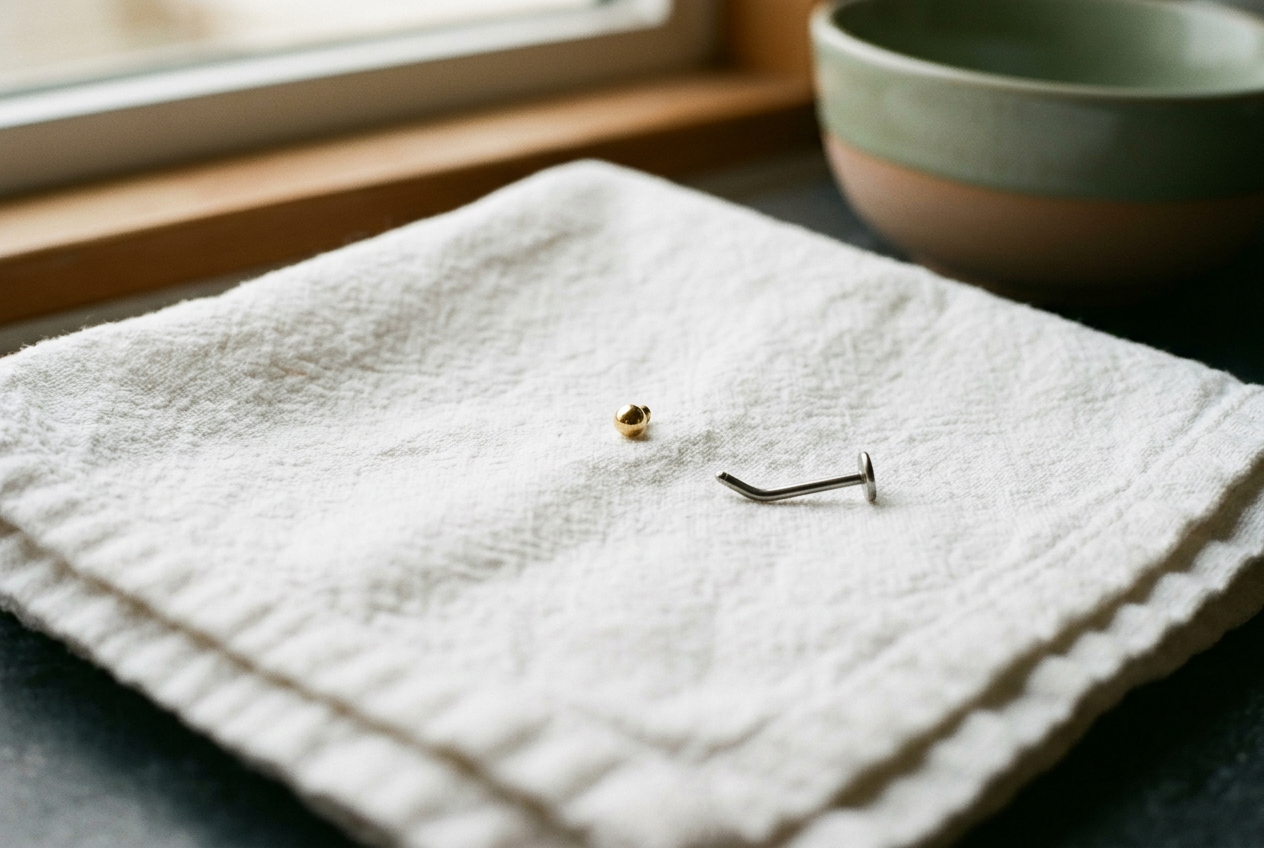
The change showed up in a small solid-gold ball end fitted to an 18-gauge implant-grade titanium labret post. A flat back earring, meaning the post’s backing sits flush against the ear, had made this pairing comfortable in a healed upper-lobe piercing. After repeated jewelry changes, though, the end began sliding into the post with less resistance.
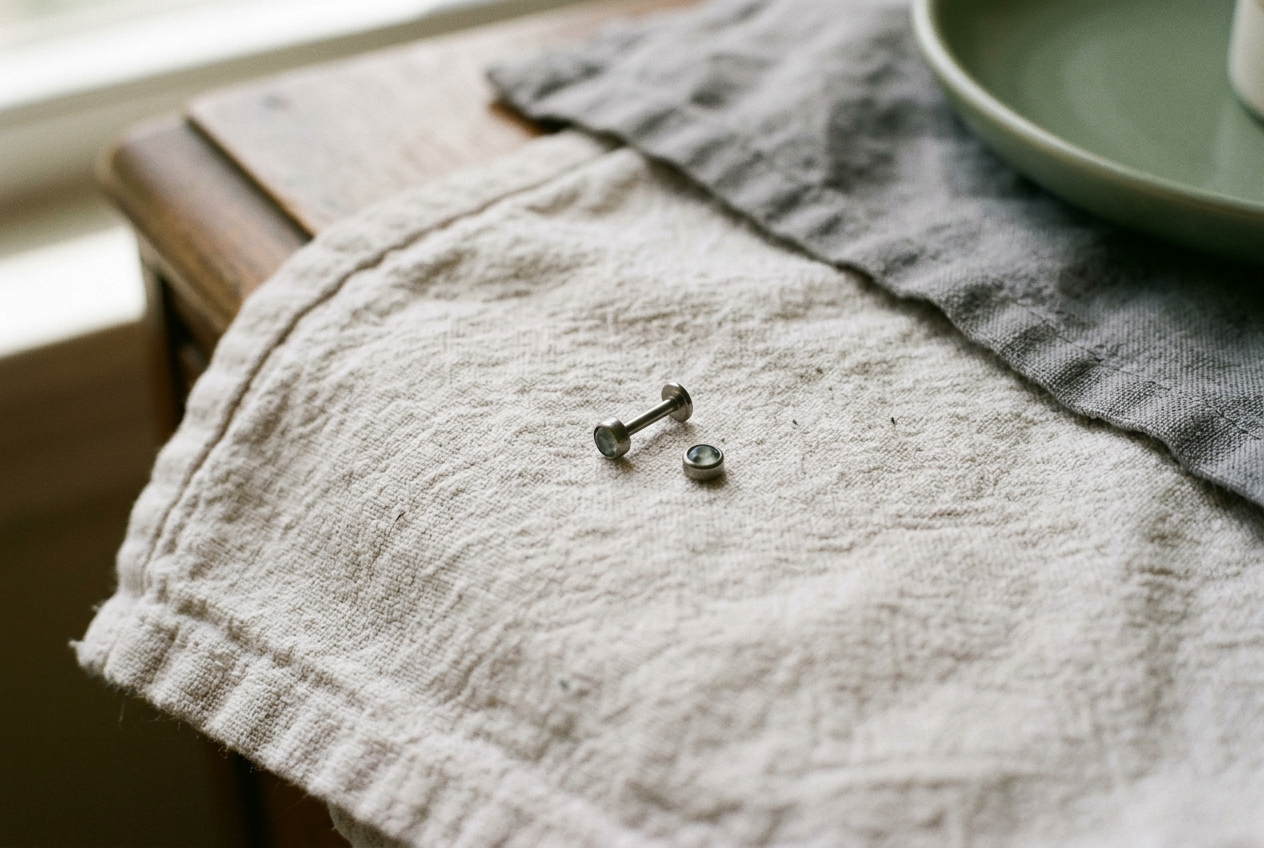
At first, it still looked secure. The ball sat against the opening, the titanium disk remained flat behind the ear and there was no visible gap. Yet a light, straight pull over a folded towel separated the two pieces. That is the useful warning: appearance cannot tell you whether a push-pin connection is holding.
The advice here is unisex because the mechanism, fit and retention check do not change across wardrobes. It matters most to anyone wearing a valuable gold or gem-set end, especially in a placement where loose jewelry could disappear into a sweater, towel or pillowcase.
The bend is the fastening system
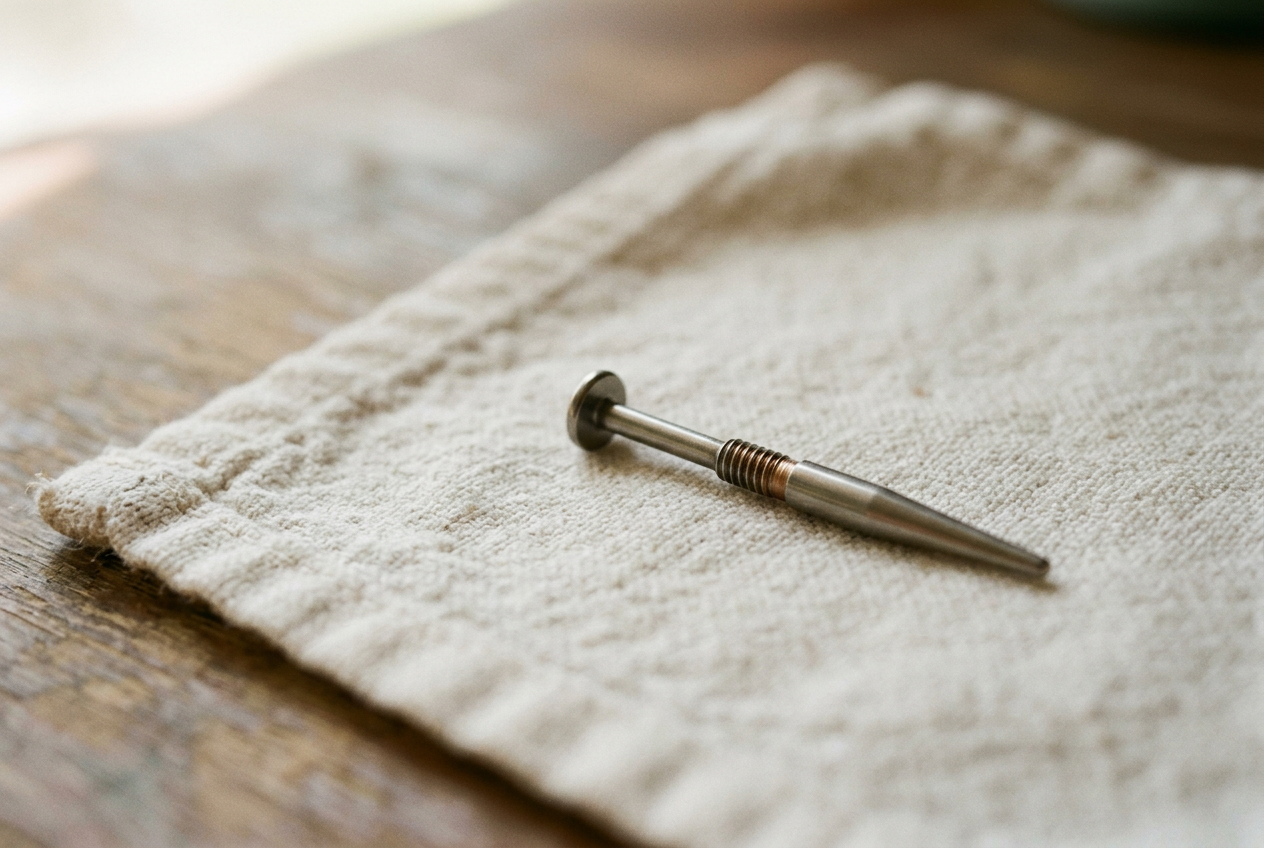
Threadless jewelry has no screw threads. The decorative end carries a narrow insertion pin, which fits inside the hollow post and holds through tension created by a slight bend. As the pin is pressed home, the post’s inner wall pushes against that bend.
That small deflection is easy to underestimate. It must create enough friction to resist an outward pull, yet it cannot be so severe that the pin jams, buckles or puts stress on the point where it joins the decorative end. The connection depends on the pin’s shape, the post’s inner diameter and the fit between parts. A gold ball on a titanium post may feel different from another end in the same post even when both are sold as compatible.
Repeated removal can change the pin. Pulling at an angle, rocking the end from side to side or straightening an existing bend during handling may reduce the pressure against the post. The receiving tube can also become distorted or contaminated with dried residue, so a loose connection does not automatically mean the decorative end has failed.
On the test earring, the declining resistance was the first clear sign. A secure threadless end usually needs steady fingertip pressure for the final seating, while this one moved from partially inserted to fully seated with little change in force. Rotation was less informative because a seated end may turn while still holding; easy outward movement was the problem.
Check retention before the earring reaches your ear
Work over a folded towel or another plain, soft surface where a dropped end cannot bounce away. Plug the sink if you are near one. Clean and dry your hands, then wipe away visible residue from the jewelry using the care method appropriate to its material. Oil, lotion and dampness make a fingertip test harder to read.
Inspect the pin in bright light before joining the pieces. A gentle curve can be normal. A sharp kink is not. Look closely at the point where the pin meets the decorative end, since movement, a crack or an uneven junction there calls for replacement rather than another bend.
Deep scoring and a pin that looks wavy from several prior adjustments also end the test.
Insert the pin partway into the post without forcing it. There should be some resistance as the bend enters the tube, followed by firmer pressure near full seating. Push until the decorative end meets the post opening without a visible gap, then hold the post and give the end a controlled, straight pull with your fingertips.
This is a retention check, not a strength contest. A hard yank can damage jewelry that was sound before the test. The practical threshold is whether the end stays seated through the kind of light pull it could meet while dressing, drying hair or changing a top; if it releases under modest fingertip pressure, do not wear a valuable end outside.
Run the check once after a change. Repeatedly pulling a secure end apart to prove that it remains secure adds the same handling that can alter the bend.
Isolate the loose part
If the end fails, compare one component at a time. Put a known-good, compatible threadless end into the same post. If that end also slips, the post may be worn, widened or mismatched. If the known-good end holds and the original does not, the original pin is the likely fault.
Compatibility needs attention here. Threadless systems are often designed to work across suitable posts and ends, but manufacturing tolerances vary, and matching the nominal gauge does not guarantee identical internal dimensions. An 18-gauge post describes the outside thickness of the post, not the exact fit of every insertion pin sold for it. Do not force a comparison piece that binds immediately.
The test earring’s titanium post held a second compatible end with clear resistance, while the gold ball remained easy to remove. That moved the decision toward the pin rather than the post. It also prevented an unnecessary post replacement, which would have meant taking the entire labret out of a settled piercing.
Post length can complicate what you feel while wearing the earring, although it does not create pin tension. A post that is too long allows more movement and leverage when hair or clothing catches the front. One that is too short can press the jewelry into the tissue, making removal difficult and masking irritation as a fastening problem. Retention and fit need separate checks.
One small adjustment, then another test
A pin that is smooth, firmly attached and only short on tension may be adjusted. With the pin inserted partway into the post, apply minimal sideways pressure to increase its curve, keeping the force away from the joint beneath the decorative end. The post acts as a guide, which is safer than gripping the narrow pin directly with household pliers.
Small means small. The pin should show a shallow bend, not an angle. Remove it, inspect it again and reinsert it to assess the change in resistance. If the end now requires steady pressure to seat and passes the straight-pull check, the adjustment has done its job.
That worked once on the gold ball used here. The final push became distinct again, and the end stayed in place under the same controlled pull that had separated it before. I would still recheck it after the next removal, because an end that has already needed correction deserves more attention than one whose fit has remained consistent.
Avoid cycling between bending and straightening. Metal can become damaged where it is repeatedly deformed, and a valuable decorative end is not improved by squeezing its finest component until the tension happens to feel right. Household pliers can leave tool marks or create a sharp bend. Adhesive is worse: it can migrate into the post, complicate removal and turn a replaceable mechanical connection into an uncertain repair.
A professional piercer can make the adjustment with better control if the end is expensive, gem-set or difficult to hold. That short visit costs time and may carry a service charge, but the tradeoff is modest beside losing a gold end outdoors.
Replacement starts where reshaping stops
Replace the decorative end if its pin is kinked, cracked, loose at the joint, deeply scratched or unable to hold after one restrained adjustment. The insertion pin is generally part of the end rather than a separately swappable finding, so replacing only that narrow piece is not a routine home option. If several sound ends fail in one post, replace the post instead.
Material affects how cautiously the piece should be handled, but color alone reveals little. Threadless ends and posts may use titanium, steel or solid gold in different combinations, and the fastening method does not establish whether a piece is suitable for sensitive skin. “Threadless” describes construction. It is not a material grade.
There is also a plain budget distinction. Adjusting a sound pin costs no new jewelry and preserves a decorative end that still has useful wear in it. Replacing an inexpensive titanium post may cost much less than replacing a solid-gold or gemstone front, so isolating the weak component first keeps the repair proportional. Continuing to wear a connection that fails the towel test saves nothing if the front disappears.
For the test pair, the adjusted gold ball remained a candidate for ordinary wear, but not for a rushed change before travel or an event. A valuable end should seat with resistance every time. If that sensation fades again, replacement is the sensible boundary.
Questions people ask
Can
I bend a threadless earring pin more than once?
A slight second adjustment may be possible if the pin remains smooth, gently curved and solid at its joint, but repeated reshaping increases the chance of kinking or damage. If tension fades again soon after correction, stop adjusting and replace the end or have a professional piercer inspect it.
Can
I mix threadless ends and posts from different brands?
Some compatible ends and posts work together, but matching the stated gauge does not guarantee the same internal fit. Test the pairing outside the ear, never force a pin that binds and reject any combination that seats without enough resistance to pass a controlled straight-pull check.
How can I tell whether the end or post is worn?
Try a known-good compatible end in the same post. If it also slips, suspect the post; if it holds while the original end releases easily, suspect the original pin. Stop if either comparison piece needs force, because mismatched dimensions can distort the jewelry and confuse the result.
Should I test a loose pin in a fresh piercing?
Do not remove or repeatedly manipulate jewelry in a fresh or irritated piercing for a home comparison test. Leave the fitted jewelry in place and ask a qualified professional piercer to assess the connection, post length and tissue, then fit any replacement before you leave.
One update a day
Today's fashion update, in your inbox
One fashion update each morning — no hype, no filler, just pieces worth wearing.