Cork Footbed Sandals Dry After Splashes. The Edges May Not.
A broken-in Birkenstock Arizona survived ordinary splashes, but its cork edge and suede lining revealed why drying method matters more than optimism.
October 5, 2026 · 7 min read
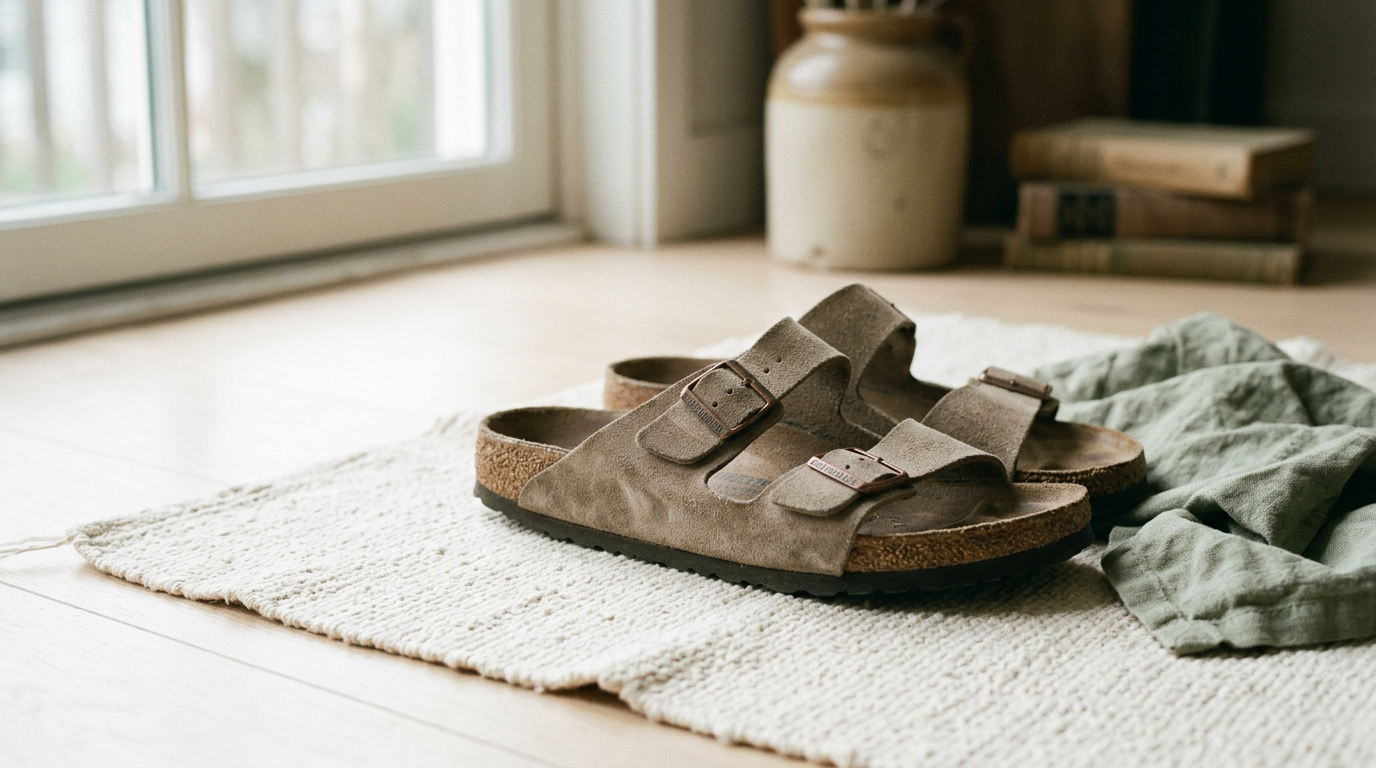
The working pair was a broken-in Birkenstock Arizona with an oiled-leather upper, suede lining, exposed cork edge and EVA outsole, worn during a week that included damp sidewalks, wet grass and the kind of shallow curb water that finds a sandal despite ample room to go elsewhere. It was not submerged. That distinction matters.
The Arizona’s cork-latex footbed, meaning granulated cork held together with latex, is built to flex under body weight without behaving like a sponge in normal wear. Above it sit jute and suede layers that can absorb moisture, while the exposed cork around the perimeter relies on a protective coating. A splash therefore reaches several materials that do not dry at the same rate.
This is unisex coverage: the material advice applies across wardrobes and sizes, though the broad platform and raised footbed edge still need to match the wearer’s width. The test pair used Birkenstock’s regular-width shape. Toes and heels sat inside the rim, which kept the foot from pressing directly on the damp edge and adding more distortion.
What changed after ordinary splashes
Water darkened the suede lining almost immediately, especially beneath the forefoot, where moisture collected between skin and footbed. The oiled-leather straps developed darker spots at their lower edges, while the cork perimeter looked deeper brown wherever its finish had already worn thin. None of this meant the sandal had collapsed. It meant the top layers were wet.
The pair was blotted with an absorbent cloth, opened at the buckles and left indoors with air moving around it. No hair dryer, radiator or direct sun was used. Concentrated heat can dry leather harshly and may stress the adhesives and latex within the footbed, so a fast blast of hot air solves the visible dampness by introducing a less entertaining problem.
After air drying overnight, most of the cork returned close to its earlier color. The suede did not. Faint tide marks remained where the wet area had ended, and the nap, which is the raised surface of the suede, felt flatter and slightly crusted beneath the toes. A dry suede brush lifted some of that texture once the footbed was no longer cool or damp.
The result was wearable, not restored. That is the useful distinction for anyone buying pale suede footbeds and expecting water to leave no forwarding address.
Darkening is not the same as deformation
Temporary darkening usually follows the path of the water. It fades as moisture leaves, although suede, unfinished leather and worn cork sealer can retain a darker outline. Deformation changes the shape or structure: the edge stays raised, the footbed curls, the layers begin separating, or the sandal no longer sits flat after it has dried.
On the Arizona, the most obvious permanent change was cosmetic. The inner cork edge near the ball of the foot developed a rougher patch, with individual cork granules more visible than before. It did not bulge enough to touch the foot, and the footbed remained level, but the formerly smooth perimeter had lost some of its sealed finish.
That small rough patch is the warning stage. Repeated splashing can keep entering the same exposed area, particularly when the factory coating has become dull or patchy through wear. Cork does not need to disintegrate dramatically to become troublesome; a lifted edge can start rubbing the side of the foot long before the whole sandal looks ruined.
Fit influences the outcome. A foot that spills over the rim presses damp cork outward, while a sandal that is too short puts the heel against the rear wall. Either mismatch adds mechanical pressure while the material is vulnerable. If the dry foot already rides on the border, water care will not rescue the sizing.
The footbed became firmer before it relaxed
The Arizona’s footbed felt stiffer during the first wear after drying, mostly at the suede surface rather than through the cork base. Moisture had flattened the nap and combined with ordinary foot residue, leaving the contact area less yielding. A little walking and dry brushing reduced the crusted feel, though the water marks stayed visible.
A cork footbed is firm by design, so stiffness alone can be hard to judge. Compare the wet pair with its own earlier feel rather than with a foam slide. Concern starts when the footbed remains rigid in one section, develops a new ridge, or rocks on a flat floor. Those changes suggest more than a stained lining.
Odor was slower to leave than surface moisture. The damp suede briefly held the enclosed, sour note familiar from shoes put away before they were ready, especially under the toe grip where airflow is poor. The practical fix was more drying time, with the sandal left unstacked and fully open. Wearing it again while the lining remains damp adds sweat to trapped moisture and extends the entire affair.
Strong fragrance does not dry a footbed. Nor does storing it in a box because the upper feels dry. Check the deepest part of the heel cup and the area beneath the toes; if either still feels cool compared with the room, the sandal needs more time.
Cork sealer protects one exposed part
Cork sealer is a flexible coating applied to the exposed cork perimeter. Birkenstock’s care guidance recommends renewing it when the cork loses its shiny surface, which describes the test pair’s rough inner edge. A thin application can slow future moisture entry and reduce crumbling caused by abrasion.
It does not turn the Arizona into a water sandal. Sealer should stay on the cork edge rather than the suede footbed, leather upper or EVA outsole, and it should go onto clean, dry cork. Coating a damp edge can trap moisture; flooding the area with product can leave a thick, conspicuous rim that feels harder than the original finish.
Sealer also cannot press swollen cork back into shape, erase suede tide marks or reunite layers that have started to separate. It is maintenance, not reconstruction. On the test Arizona, applying it before the worn patch became rough would have been the better move. Applying it afterward could protect what remained, but the texture change was already there.
The worthwhile schedule is visual rather than calendar based. Inspect the perimeter while cleaning the sandals. Renew the coating when the sheen has disappeared in exposed patches, then let it cure according to the product instructions before wearing the pair. More frequent coating is not automatically better.
EVA is the practical choice for predictably wet days
EVA, or ethylene-vinyl acetate, is a lightweight water-resistant foam used for one-piece molded sandals. Birkenstock makes an EVA version of the Arizona, which offers a direct alternative to the leather-and-cork pair without changing the two-strap outline. It generally costs less than its cork-footbed counterpart and can be rinsed and dried with far less ceremony.
Choose EVA for pool decks, outdoor showers, repeated wet commuting or trips where the sandals will be packed before a suede footbed could dry. It will not develop the same molded cork impression underfoot, and foam can feel hotter or less stable depending on fit and tread. Wet traction also varies by surface. Water resistance is not a promise against slipping.
For city wear with occasional splashes, the cork Arizona remains reasonable if its shaped footbed suits the wearer and there is time to dry it indoors. For weather that is routinely wet, paying premium-leather-sandal money and then guarding every curb is poor logistics. The EVA pair is less refined, but it understands the assignment.
Questions people ask
Can cork footbed sandals get wet once without being ruined?
Usually, an ordinary splash will not ruin a sound cork footbed if the sandal is blotted and allowed to dry slowly. Expect temporary darkening and possible water marks on suede. Persistent curling, raised cork or separation between layers after drying points to structural damage rather than a harmless stain.
How should wet cork sandals be dried?
Open the straps, blot standing water and place the sandals indoors where air can move around them. Keep them away from radiators, hair dryers and strong direct sun, which can stress leather, adhesives and the cork-latex structure. Do not stack or wear the pair again while the heel cup still feels cool and damp.
Does cork sealer make sandals waterproof?
No. Cork sealer protects the exposed perimeter where the original coating has worn away, but it does not waterproof suede, leather or the internal jute layers. Apply a thin coat only to clean, dry cork, and follow the sealer’s curing instructions before putting the sandal back into use.
When should I replace cork sandals with an EVA pair?
Use EVA when regular exposure to water is part of the plan rather than an accident. It suits pools, wet commutes and travel days with little drying time. Keep cork for mostly dry wear if you value its shaped support and are willing to inspect the edge, dry the lining and tolerate visible water marks.
One update a day
Today's fashion update, in your inbox
One fashion update each morning — no hype, no filler, just pieces worth wearing.