Rounded Ballet Flats Make Wide Trousers Look Current Longer
Square toes still have presence, but rounded and almond ballet flats sit more quietly under wider trouser hems. The least dated choice depends on vamp depth, leather softness and how much toe remains visible.
Women's · October 8, 2026 · 8 min read
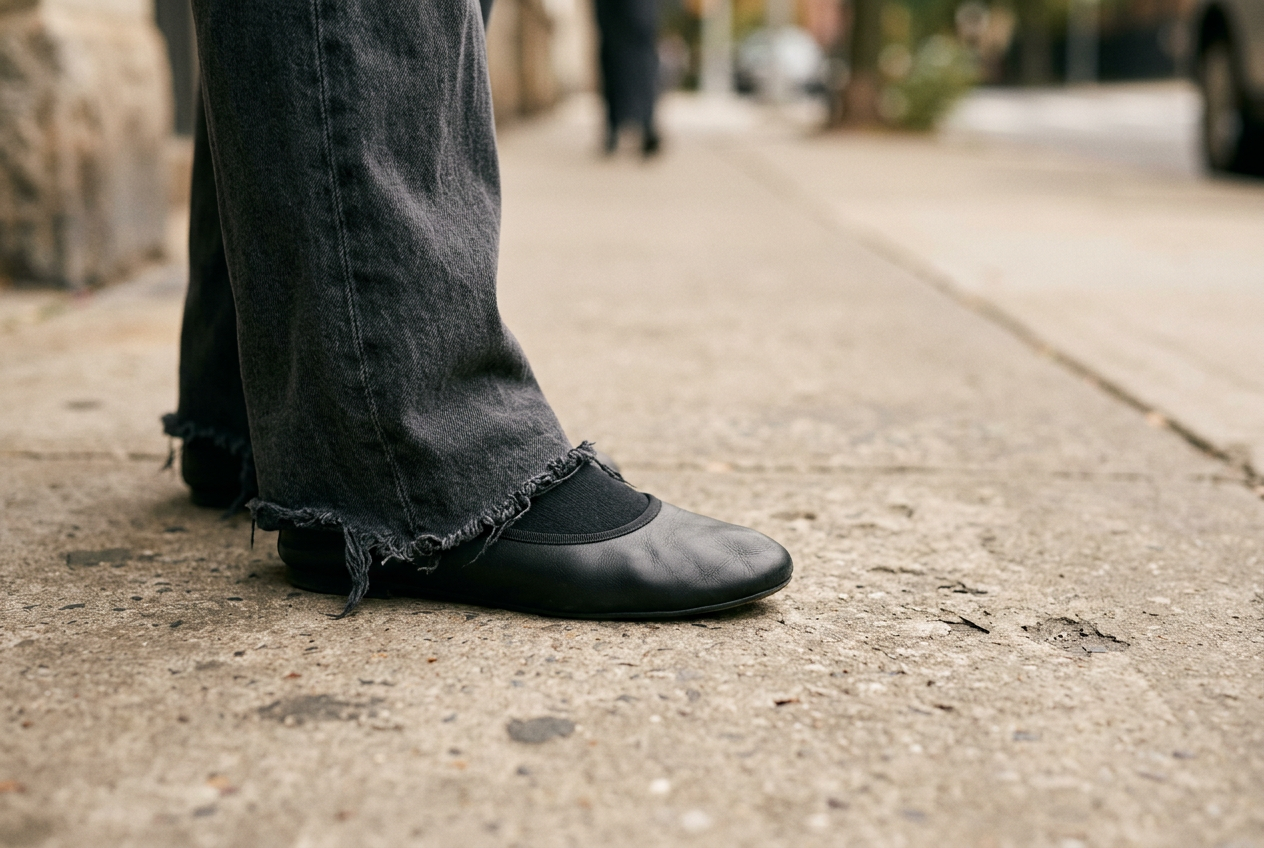
The useful test is not whether a rounded ballet flat looks new. It is whether the shoe still works when only its front inch appears beneath a full-length trouser hem, and whether that visible piece will feel stranded after the current ballet-flat cycle settles down.
For this women’s trend analysis, the reference shoe is Mansur Gavriel’s Dream Ballerina, a soft leather flat with a rounded toe and gathered topline. Put it under charcoal wide-leg trousers that break once over the foot. Most of the shoe disappears, leaving a curved toe, a little leather and no hard horizontal edge. That small view explains why roundness is gaining ground.
A square toe asks to be noticed. A round toe can finish the line of the trouser without turning the foot into the outfit’s timestamp.
The new assortment is broader than one shape
Current brand assortments do not show a clean transfer of power from square to round. They show overlap. Rounded ballerinas appear across luxury and contemporary collections, including soft leather versions, mesh flats and the elastic-strapped styles associated with the continuing Miu Miu-led ballet revival. Alaïa’s mesh ballet flats also place a rounded outline inside a more graphic construction, while longstanding makers such as Repetto never needed to abandon the curved toe in the first place.
Square toes remain available, especially in firmer leather flats with higher vamps. A vamp is the part of the shoe covering the top of the foot. The shape now reads less like the neutral default it became during the last square-toe swing and more like a deliberate design decision, particularly when the front edge is broad, flat and visibly angular.
Almond toes occupy the less photogenic middle. They taper more than a round toe without coming to a point, which gives the foot some length while avoiding the ledge effect of a square front. Product filters do not handle that distinction well. Retailers may call the same outline round, almond or pointed, depending on the rest of the assortment, so the product photograph matters more than the label.
The Dream Ballerina is useful precisely because it is not an exaggerated round. Its soft leather allows the upper to collapse closer to the foot, while the gathered edge makes the opening look flexible rather than architectural. Under a wide hem, that construction gives the trouser fabric somewhere to fall. A rigid patent flat with the same toe outline would produce a sharper interruption.
Resale shows persistence, not a verdict
Secondhand listings complicate the story. Square-toe ballet flats remain easy to encounter on large resale platforms, mixed among loafers, slingbacks and flat pumps that sellers have tagged as ballerinas. That visibility records several seasons of supply. It does not prove that shoppers are choosing square toes now, and an unsold listing is not evidence of demand.
Rounded flats have a different resale advantage: the category includes enduring models that return regardless of a particular trend cycle. Repetto’s Cendrillon, with its rounded front and low-cut opening, can sit beside newer elastic-strap ballerinas without looking as though both came from the same moment. Ferragamo’s bow flats, depending on the model, often occupy the round-to-almond range and carry their own design history. These shoes may look current again, but they were never absent enough to become pure revival pieces.
Almond-toe listings require more work. Sellers often photograph flats from above, where a moderately tapered toe can look pointed, while a wide-angle phone lens can make a round toe seem broader than it is. Check the outsole image. The sole reveals whether the front narrows gradually, ends in a shallow curve or meets a near-straight edge.
Condition matters more than trend terminology. Soft leather round toes show the shape of the wearer’s foot, including toe impressions and collapsed sidewalls. Square toes tend to preserve their outline when reinforced, but scuffed corners are conspicuous. Mesh can stretch or snag, and satin shows abrasion where a trouser hem repeatedly touches the upper.
A low resale price does not compensate for a distorted topline that no longer holds the heel.
Wide hems change which details survive
Wider trousers conceal most of a ballet flat, so the usual shopping focus on bows, straps and topline curves can be misplaced. The exposed toe does nearly all the visual work. Hem length decides how much.
A trouser that ends above the shoe can support a strongly square toe because the eye sees the whole flat and understands the geometry. Once the hem reaches the vamp or breaks over it, the same toe becomes a short horizontal bar. That can look crisp with pressed wool trousers. With fluid viscose, washed linen or denim that pools, it can appear abruptly cut off.
Rounded toes accept an imprecise hem more easily. The curve remains legible when fabric shifts during walking, and a scuff at the outer edge is less isolated than it is on a square corner. The risk is sweetness. A very shallow vamp, tiny bow and glossy pale upper can read like a literal dance slipper, particularly with cropped trousers or a gathered skirt.
The Dream Ballerina avoids some of that problem in black or another dark neutral because the gathered edge recedes. With wider trousers, its main fit quirk becomes more important than its decoration: soft, minimally structured leather offers little protection when the hem presses against the shoe, and it may outline the toes if the fit is too short. Buying extra length is not an automatic fix. A loose heel in a low-cut flat lifts with every step.
Almond toes offer the safest visual compromise for someone who dislikes an overtly rounded shoe. They extend the trouser line without producing a sharp point, although the internal fit may be narrower than the outside silhouette suggests. Look for usable width through the ball of the foot, then check that the taper begins beyond the little toe rather than across it.
Material can overrule the toe shape
Soft nappa leather, meaning fine-grained leather finished for a supple hand, makes a rounded ballet flat look relaxed and lets it mold quickly. It also provides limited structure and may show pressure from individual toes. Firmer calf leather holds a cleaner outline but usually asks for more break-in around the topline and heel.
Patent leather intensifies whichever shape it covers. A square patent toe looks especially graphic; a round patent toe can look doll-like. Mesh reduces the visual weight of both shapes, though its transparency exposes the actual foot outline, which means a supposedly square mesh flat may read rounded once worn.
Sole construction deserves attention if the shoe will be more than an indoor or office pair. Thin leather soles flex beautifully and wear quickly on wet, rough pavement. Rubber sections add grip and can make a delicate upper more practical, although they do not create arch support. Many ballet flats remain flat in the literal sense, with little cushioning and no meaningful structure through the midfoot.
At the lower end of the market, inspect whether the upper creases as one broad plastic-looking fold. Synthetic material can make an acceptable occasional shoe, but a stiff upper combined with a shallow vamp is prone to gaping at the sides. Paying more becomes worthwhile when it buys better leather, a stable heel and a shape that follows the foot. A prominent logo or crystal strap does not solve poor fit.
The buy, keep and skip decision
Buy a softly rounded flat if most of your trousers are full length, fluid and wide through the hem. Keep the color close to the trouser or hosiery when you want an uninterrupted line. Dark brown, burgundy and black are quieter than high-contrast cream under dark pants, while a red flat makes the exposed curve intentional.
Choose almond when your wardrobe moves between wide trousers and straighter jeans. It has enough direction to show beneath a hem but is less dependent on the square-toe cycle. The most durable version has a moderate vamp and no severe point.
Keep an existing square-toe pair if the leather is good, the corners remain clean and you wear it with trousers that reveal enough of the shoe. There is no practical reason to replace a comfortable pair merely because roundness is rising. Styling can move the square toe away from its earlier minimalism: a longer trouser, textured sock or less rigid bag changes the context.
Skip a new, sharply squared ballet flat if its appeal depends on looking immediately recognizable as current. Resale already contains plenty of square options, so this is a shape worth trying secondhand before paying designer prices. Check outsole wear, corner damage and heel grip, then compare the internal length with a flat you own rather than trusting the marked size alone.
The Dream Ballerina remains the benchmark, not an automatic recommendation. Its rounded front works under the wider hem, but soft construction and a thin flat sole ask the wearer to accept less support and more visible molding. Someone who walks several miles a day may get better use from a round-toe loafer or a ballet flat with a rubber outsole and a removable cushioned insole.
Questions people ask
Are round-toe ballet flats replacing square toes?
They are gaining space in new assortments, but square toes have not disappeared. The shift is better understood as a change in emphasis: rounded shapes now look fresher, while strongly squared fronts read as a more specific styling choice rather than the default flat.
Which ballet-flat toe works best with wide-leg trousers?
A restrained round or soft almond toe is easiest with a full-length wide hem because the visible front continues the trouser line without creating a hard edge. Square toes work better when the hem is short enough to show the vamp and make the shoe’s geometry legible.
Should
I buy ballet flats in soft or structured leather?
Soft leather molds faster and sits quietly under fluid trousers, but it can reveal toe pressure and offers little protection. Structured leather preserves the silhouette and may hold the heel better, though the topline can require breaking in. Fit through the ball of the foot matters more than softness alone.
Are secondhand square-toe flats already dated?
No. A plain square toe in good leather can still work, especially with cropped or pressed trousers. Avoid pairs with badly scuffed corners or an extremely broad front unless that geometry is the point; those details carry a stronger period signal than a subtly squared outline.
One update a day
Today's fashion update, in your inbox
One fashion update each morning — no hype, no filler, just pieces worth wearing.