Chocolate Brown Can Soften Summer Black, but Not Everywhere
Dark brown is moving into the jobs usually assigned to black accessories. Leather makes the easiest case; nylon and translucent finishes require a closer look at undertone, texture, and upkeep.
October 7, 2026 · 7 min read
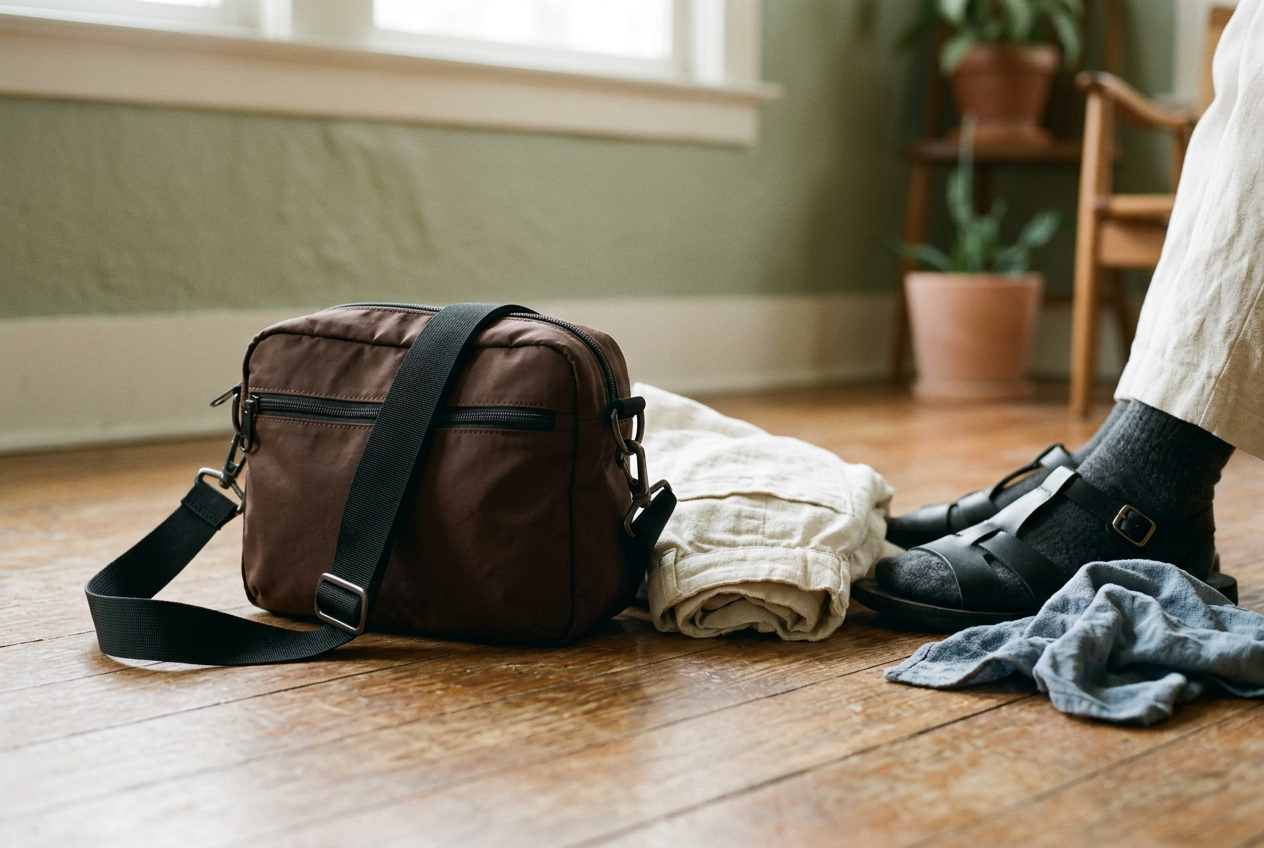
The object that clarified this trend was a chocolate-brown nylon shoulder bag with a black webbing strap, a zip top, and enough room for a phone, sunglasses, sunscreen, and a small water bottle. Worn for a warm week with clothes that would normally take a black bag, it looked softer beside cream cotton and faded blue denim. Against a cool gray dress, it looked less intentional.
That distinction matters. Chocolate brown is being presented as a near-neutral, meaning a color expected to perform many of black’s practical jobs without demanding a new outfit around it, but the two colors do not behave alike. Black creates a firm edge. Brown absorbs some contrast and exposes every undertone around it.
This is unisex advice. The relevant variables are material, color temperature, and the palette already in the closet, rather than the department where the accessory is sold.
The useful swap starts with undertone
“Chocolate” covers more ground than product names suggest. Some dark browns carry red, like bitter cocoa mixed with burgundy. Others lean yellow or olive. A cool brown can approach charcoal under indoor light, then turn noticeably earthy in full sun.
Undertone, the quieter color cast beneath the main color, determines whether the accessory settles into an outfit or sits beside it as an unrelated dark patch.
The nylon shoulder bag was a warm brown with a slight red cast. That gave white, ecru, camel, rust, faded indigo, and warm navy a less severe finish than black would have supplied. The same red cast argued with blue-gray and optic white, particularly when black shoes remained in the outfit. The bag had not replaced black there.
It had introduced a second dark neutral that needed managing.
A wardrobe gains useful softness from brown when it already contains warm whites, denim, tobacco, khaki, olive, muted prints, or gold-tone hardware. Brown also helps people who find black accessories visually heavy against pale summer fabric, especially linen and washed cotton. If most clothes are cool gray, icy blue, stark white, magenta, or black with silver hardware, a reddish chocolate accessory may be harder to repeat than the trend language implies.
The quickest test happens before checkout. Place the accessory beside the two pairs of shoes and two summer bottoms worn most often. Do this in daylight. If the brown relates to at least three of those pieces without requiring a matching belt, it can work as a neutral.
If it only looks convincing beside cream, it is an accent color with good publicity.
Leather earns the strongest case
Dark brown leather has depth because the surface reflects light unevenly, particularly on grained or lightly polished hides. That variation makes a small mismatch between bag and shoe look normal. Black leather can do the same, but brown reveals texture more readily, which is why a plain belt or compact shoulder bag may look considered without adding hardware or an elaborate shape.
Leather is also where paying more can make sense, provided the construction supports it. Look at the edge paint, the coating applied to a cut leather edge, for cracks around belt holes and bag handles. Check whether the surface color appears flat and heavily coated or allows some grain to show. A dark brown bag intended for frequent summer wear should have a lining that can be cleaned, secure stitching at the strap attachment, and feet only if its structured base will genuinely rest on tables or floors.
Maintenance is not difficult, but brown is less forgiving of neglect than black. Water can leave a dark perimeter as it dries, pale leather cream can collect in the grain, and hand sanitizer or sunscreen may disturb a coated finish. Wipe dust with a dry cloth, test any conditioner in a hidden area, and avoid treating a new bag merely because it is new. Conditioning too often can darken leather and soften a shape that depends on structure.
For a first swap, a belt is lower risk than a large tote. It repeats near the center of an outfit, where dark brown can connect denim to a white shirt or soften a black dress without taking over much visual space. A leather bag is the better investment only after the daylight test works. A costly chocolate bag that needs dedicated shoes is not a neutral purchase.
Nylon exposes the styling problem
Nylon has fewer natural color variations, so the exact dye does more work. On the weeklong test bag, the smooth woven shell read reddish in direct sun and almost black at dusk, while the black strap remained black in every light. That built-in contrast helped when black sandals were part of the outfit, although it also made the brown look like a deliberate color choice rather than a full replacement.
The material changed the mood as much as the color. Brown leather can suggest polish; brown nylon often retains the practical associations of backpacks, packable totes, and travel bags. That can be useful with a tank, loose trousers, and walking sandals, where black nylon may look overly sporty or visually dense. Beside a tailored summer dress, the softness of the color does not cancel the casual fabric.
After repeated handling, the test bag showed the ordinary weaknesses of dark nylon. Dust gathered at the lower seams, and sunscreen left a pale streak where a forearm crossed the front. A damp, undyed cloth removed the mark, but scrubbing would have risked creating a cleaner, lighter patch. Coated nylon, fabric given a surface layer for water resistance or structure, may repel a spill more readily, though that coating can crease or become tacky with age depending on its composition.
Brown nylon is therefore the sensible low-commitment trial, not automatically the investment choice. Buy it when the shape and weight already suit daily use, and when the brown improves outfits you own. Paying a premium solely for the seasonal color is harder to defend because nylon does not acquire the same attractive surface variation as leather, and an awkward undertone will remain awkward.
Translucent brown works by different rules
A translucent chocolate accessory does not behave like solid brown. Light passes through it, the contents or skin beneath affect the apparent color, and edges usually look darker than broad surfaces. This is common in resin-look bangles, acetate-style sunglasses, and clear brown bags made from plastic sheet.
Material labels matter here. Acetate is a plant-derived cellulosic plastic often used for eyewear, while PVC and TPU are different flexible plastics commonly found in transparent bags and trims. They do not share identical durability or care needs, so “translucent brown” describes an appearance, not a construction standard.
On sunglasses, tortoiseshell or transparent brown can be more forgiving than opaque black because variation is already part of the frame. Check the color against the skin in daylight, but judge the lens quality, hinge movement, and fit before the shade. A flattering frame that slides down the nose in heat is still a failed purchase.
Transparent brown bags are less dependable. Seams and reinforcement patches create dark lines, contents interrupt the color, and sunscreen or fingerprints can turn a polished surface cloudy until cleaned. Soft plastic can also pick up dye from dark fabric. Keep it away from prolonged heat, wipe it with a soft damp cloth, and do not store it folded under weight unless the maker instructs that it can be folded.
This is the category where the trend may not be worth much money yet. A translucent brown bangle or sunglass frame can repeat easily because it occupies little space. A large transparent tote asks the wearer to coordinate both its undertone and everything visible inside it. Black was not creating that workload.
The decision belongs to the existing wardrobe
The tested nylon bag earned a place with ecru trousers, a faded denim shirt, olive shorts, and warm navy. It did not improve cool gray, and it made an all-black outfit look as though the bag had been substituted at the last minute. The black strap saved some combinations, but relying on that detail missed the point of buying brown.
A useful order of trial is leather belt first, then a small bag, followed by eyewear if transparent brown suits the face. Nylon makes sense earlier for someone whose daily clothes are casual and who values low weight. A translucent tote belongs at the end, after the color has already proved itself elsewhere.
Do not force exact matching. Two browns with similar warmth but different textures usually coexist better than a leather bag and shoe that almost match in color yet diverge under sunlight. Repeating brown once is enough when another element, such as warm denim stitching or gold-tone hardware, gives it company.
The trend is real enough to test, but it is not a universal correction to black. For some wardrobes, chocolate brown removes harshness and makes summer fabrics easier to wear. For others, it becomes a demanding near-neutral that coordinates with cream and little else.
Questions people ask
Can I wear a brown bag with black shoes?
Yes, particularly when the bag includes black trim or the outfit repeats both colors elsewhere. Keep the brown distinctly brown rather than nearly black, and avoid adding a belt in a third dark shade. The tested nylon bag worked with black sandals because its webbing strap created a visible connection.
Which brown accessory is safest to buy first?
A dark brown leather belt is the lowest-risk trial because it uses little color and can link pale shirts, denim, olive, or black. If belts are not part of your wardrobe, try a compact bag with a returnable purchase rather than committing to a large tote or expensive designer style.
Is brown nylon easier to care for than brown leather?
It tolerates light rain and casual handling more easily in many cases, but sunscreen, dust, and oily marks can show as pale patches. Use a damp undyed cloth and follow the care label. Leather needs more cautious treatment, yet minor tonal variation usually looks more natural on leather than uneven cleaning does on nylon.
Will chocolate brown still work after summer?
Dark brown carries well into fall when the undertone already suits your denim, outerwear, and shoes. Translucent brown reads more seasonally specific, while leather has the longest useful span. Before buying, test the piece against one warm-weather outfit and one outfit you expect to wear when temperatures drop.
One update a day
Today's fashion update, in your inbox
One fashion update each morning — no hype, no filler, just pieces worth wearing.